★★★★★ Tourgy Tourz: rated 4.9 by travellers · Members of ATTA, SATSA & APTA
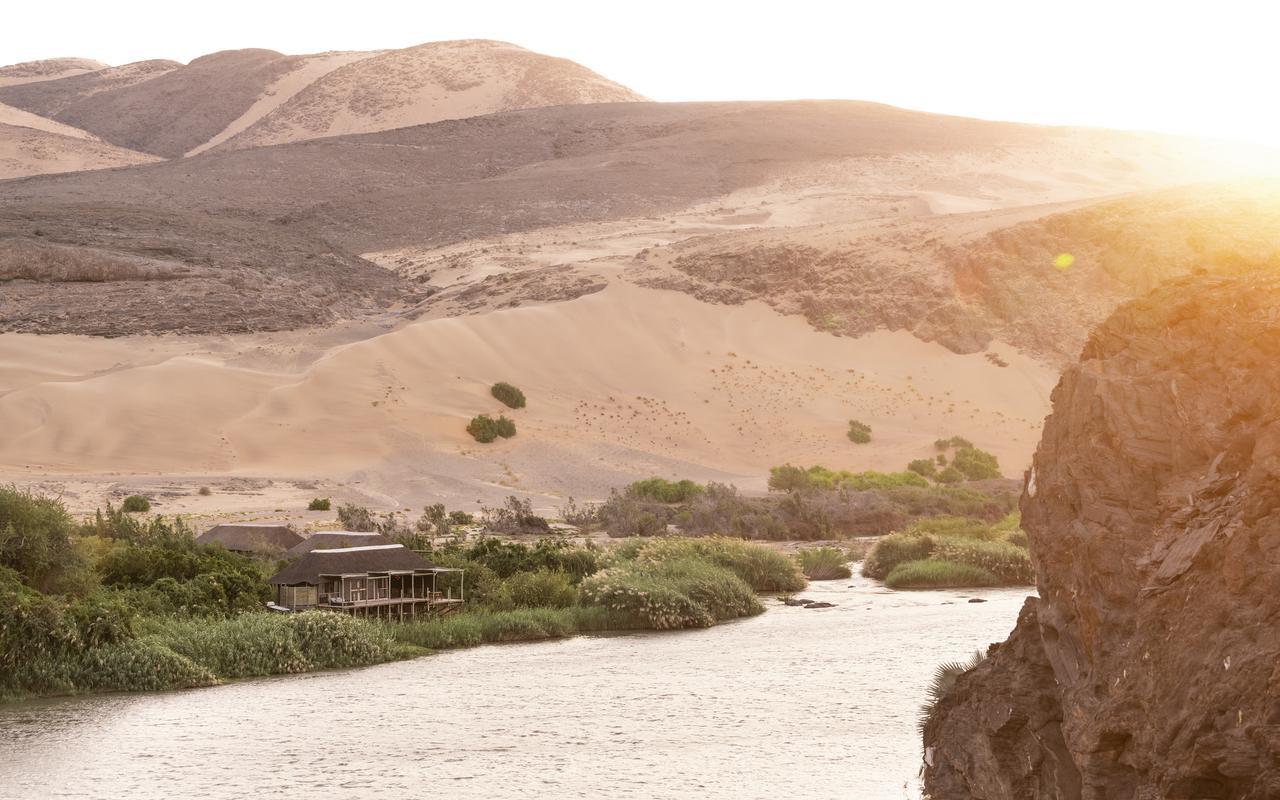
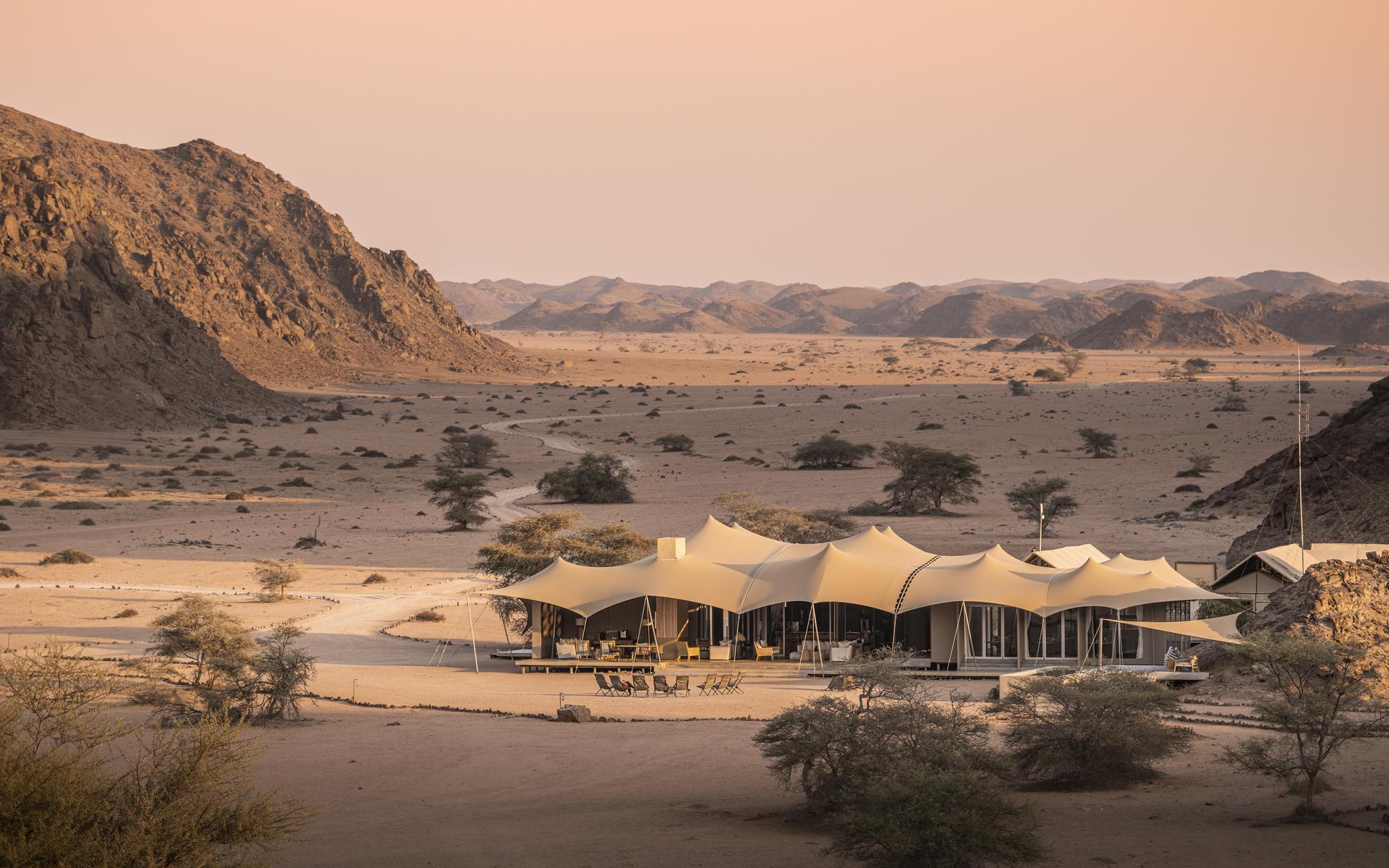
Hoanib Skeleton Coast Camp in the Hoanib River valley, Namibia
North-west Namibia

Skeleton Coast safaris & fly-in tours

Fog rolling off the Atlantic, shipwrecks half-buried in sand, and elephants and lions living in a desert. We fly you between Wilderness camps in some of the wildest country in Africa.

Camps fromN$9,429 per person per night
Getting thereLight aircraft or 4x4
Ideal length7 to 10 nights
Best forLuxury, honeymoons, wildlife
Where the desert meets the sea

Why the Skeleton Coast is unlike anywhere else

The cold Benguela Current meets the Namib Desert along Namibia's north-western shore, wrapping it in morning fog that gave sailors nightmares and gave the coast its name.

Inland, dry riverbeds like the Hoanib and Hoarusib cut green ribbons through the sand. That's where desert-adapted elephants, giraffe and lions survive in a landscape that looks too harsh for life, and where the best camps are hidden.

The far north is almost impossible to reach by road, so most travellers fly in on small aircraft. The flights are part of the adventure: dunes, canyons and the coastline unfold below you.

Read about the Skeleton Coast shipwrecks →
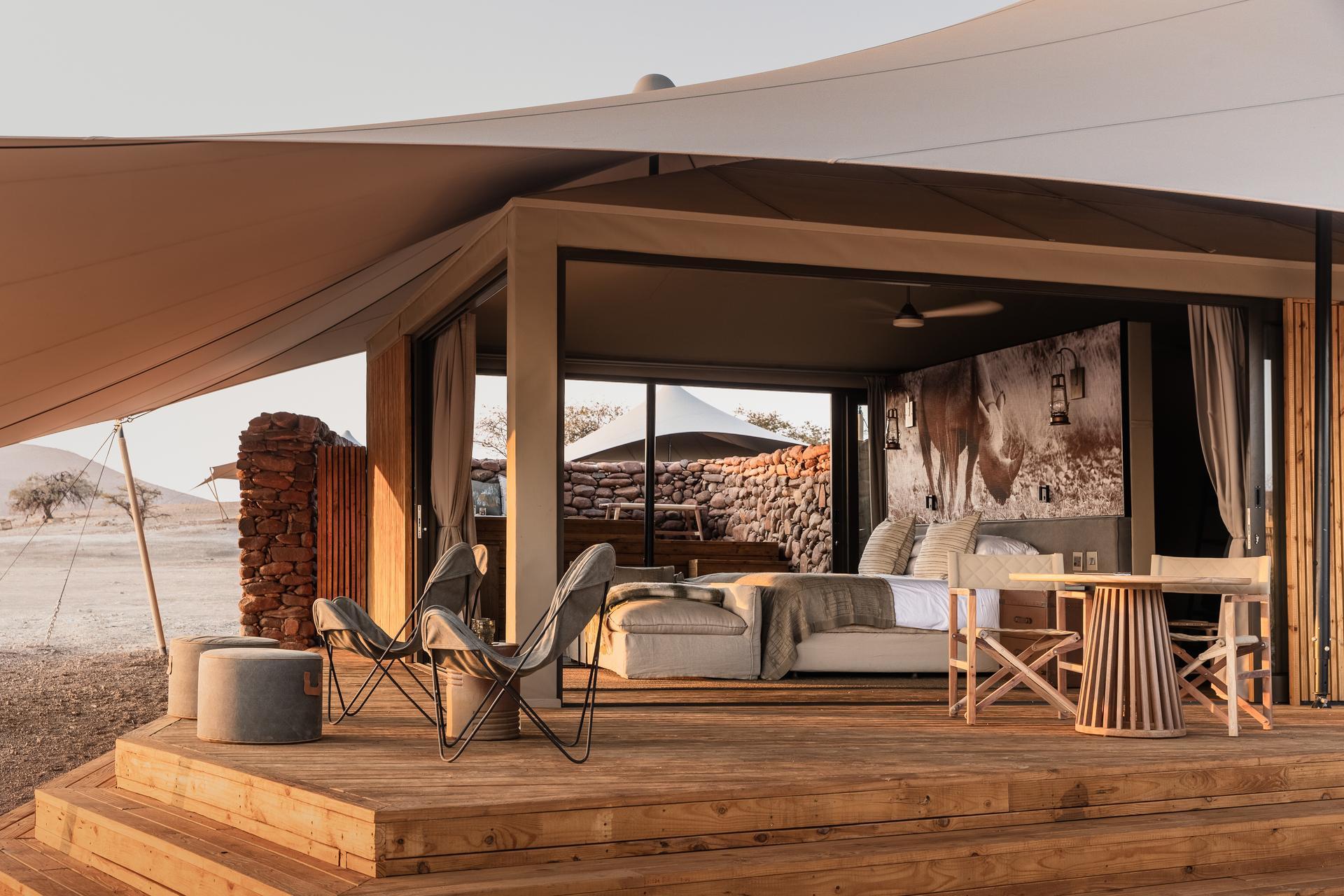
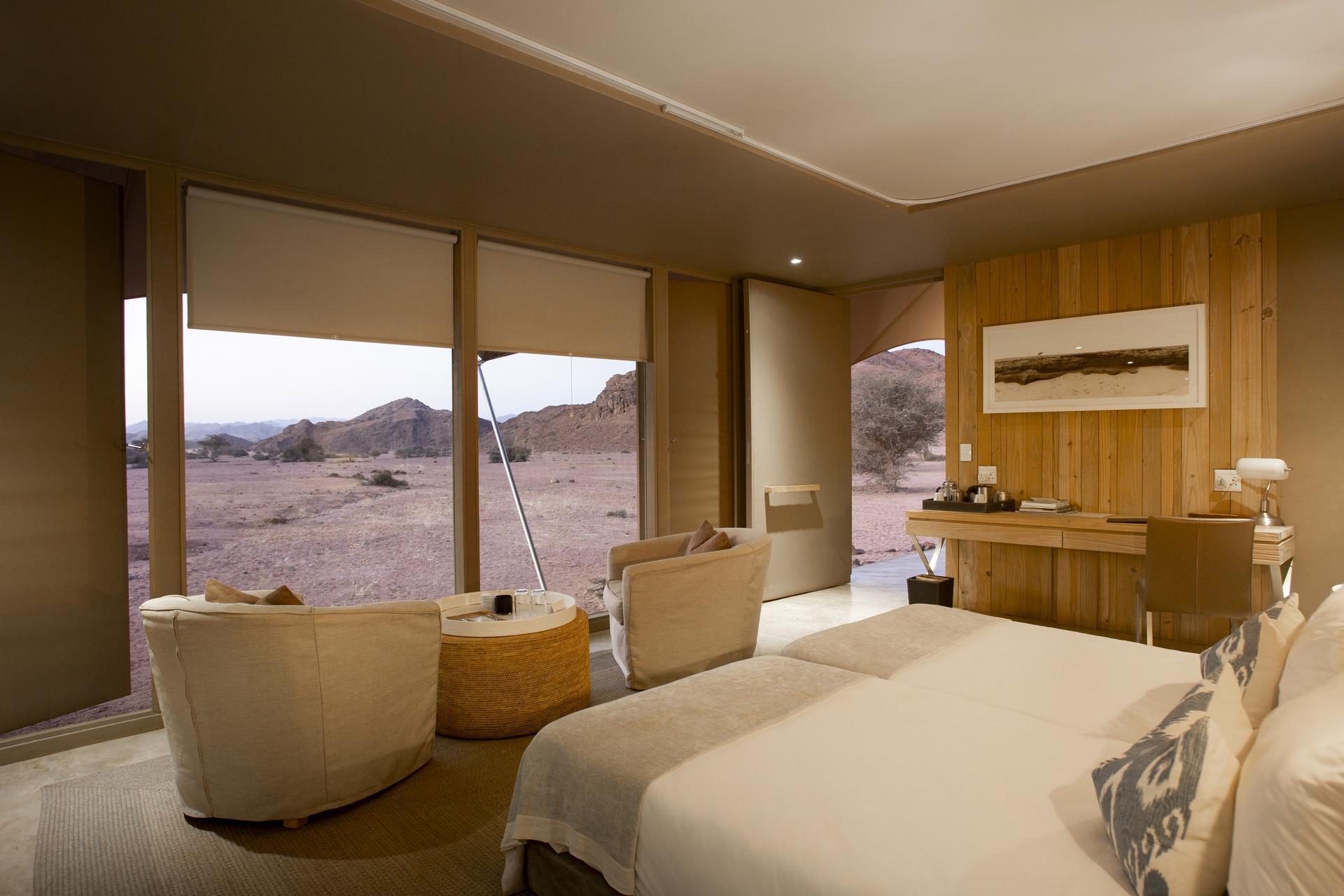
View from a tent at Hoanib Skeleton Coast Camp
Wilderness camps

The Skeleton Coast and Damaraland camps

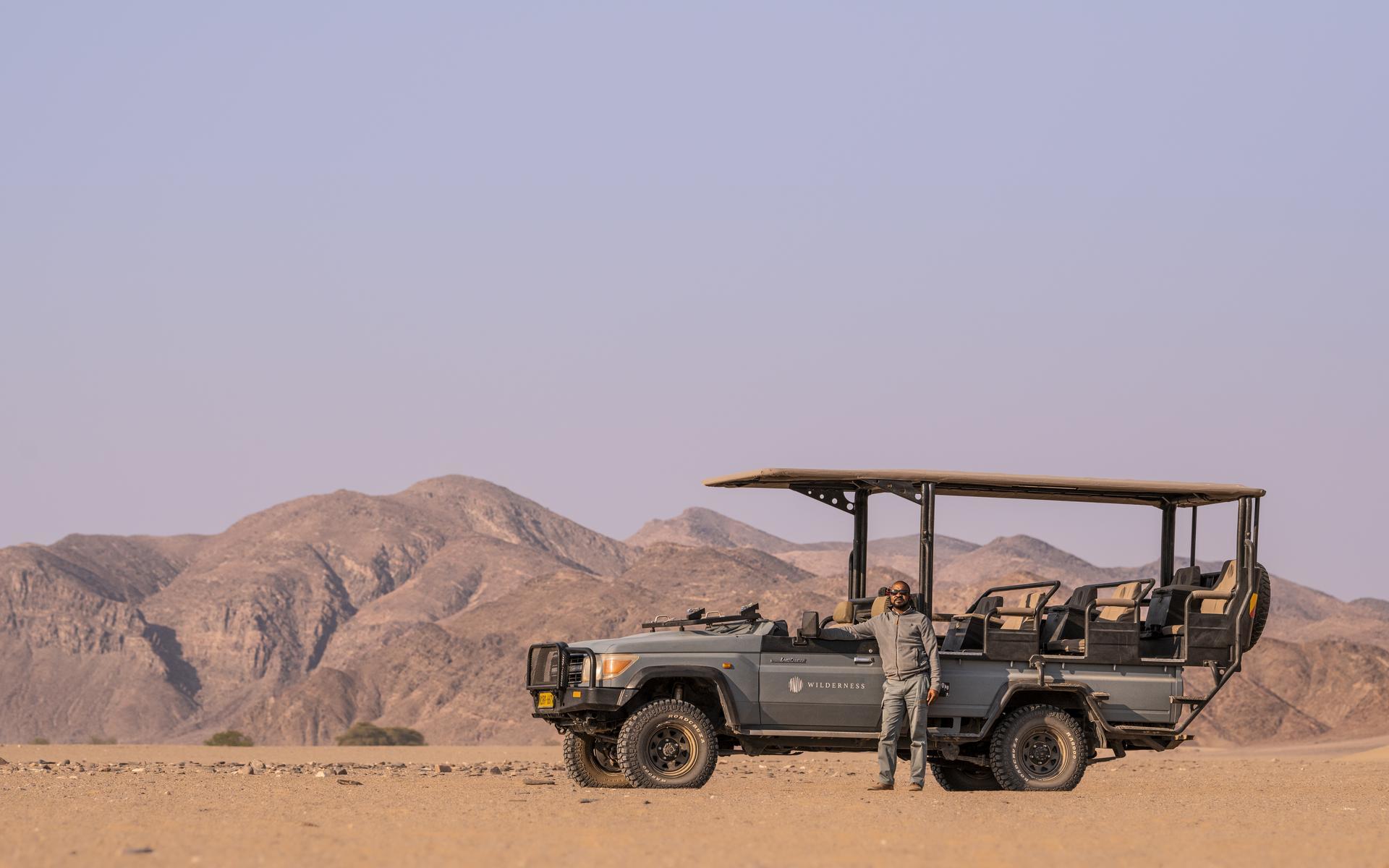
Wilderness runs the best-placed camps in the north-west. Combine two to four of them, linked by daily light aircraft flights.

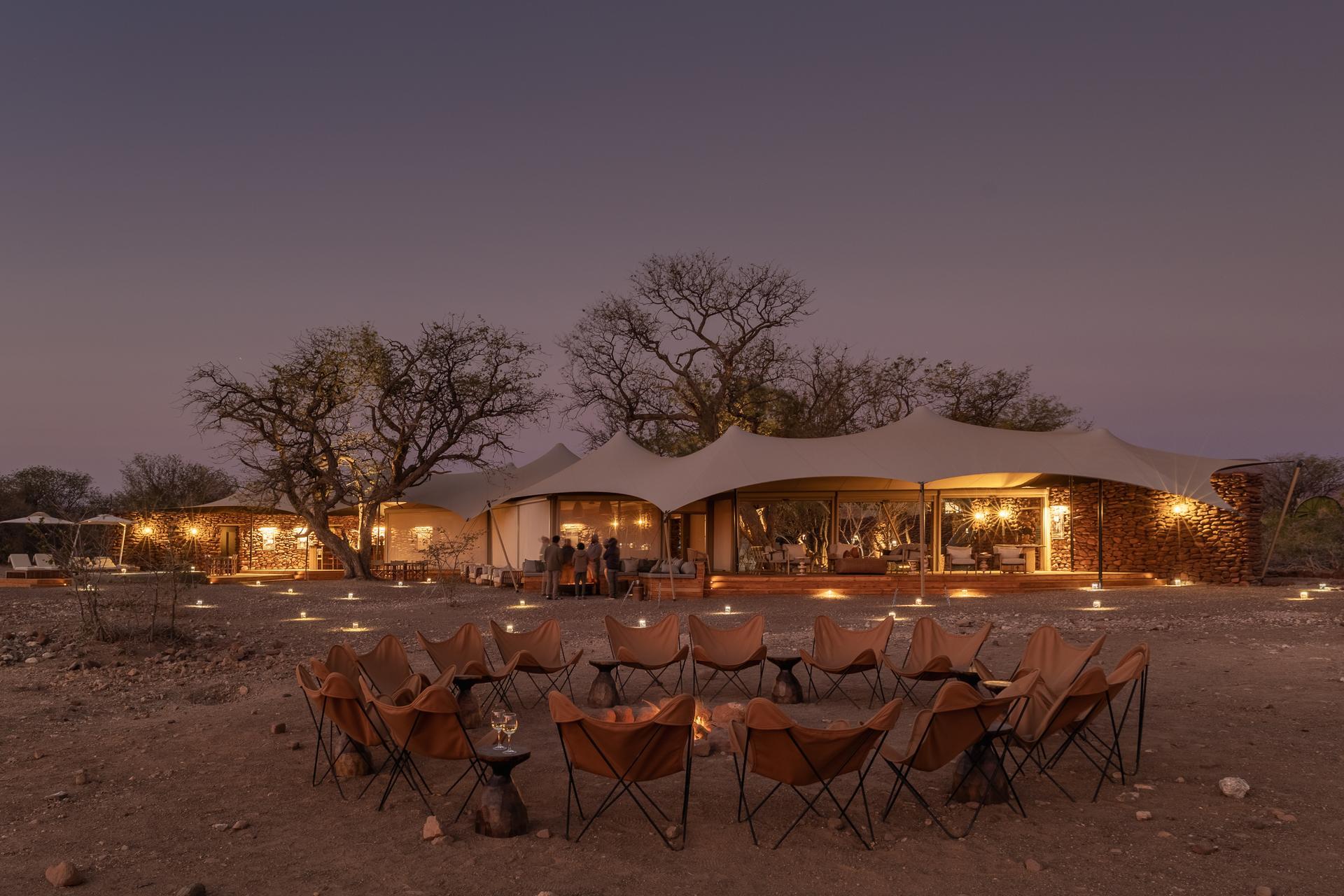
Hoanib Skeleton Coast CampHoanib River · fly-in only

Hoanib Skeleton Coast

Desert elephants, lions and giraffe in the Hoanib valley, plus a full day out to the coast for seals and shipwrecks. The heart of any Skeleton Coast safari.

Serra Cafema on the Kunene RiverKunene River · fly-in only

Serra Cafema

On the Kunene River, where tall dunes meet a ribbon of green on the Angolan border. Boat trips, dune excursions and visits to Himba communities.

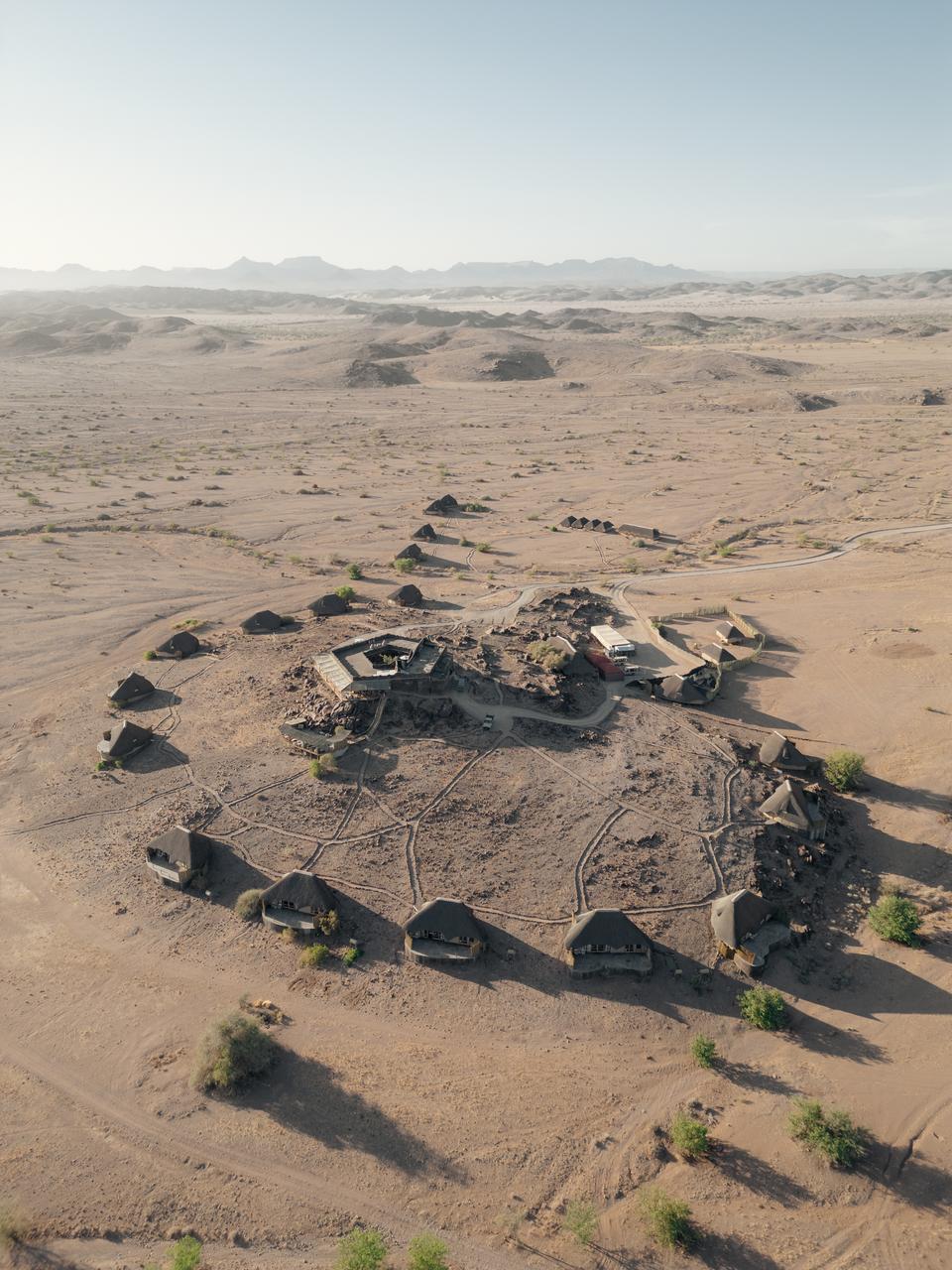
Tent at Desert Rhino Camp, DamaralandDamaraland · private concession

Desert Rhino Camp

Track desert-adapted black rhino on foot with expert trackers, then share stories round the fire under the stars.

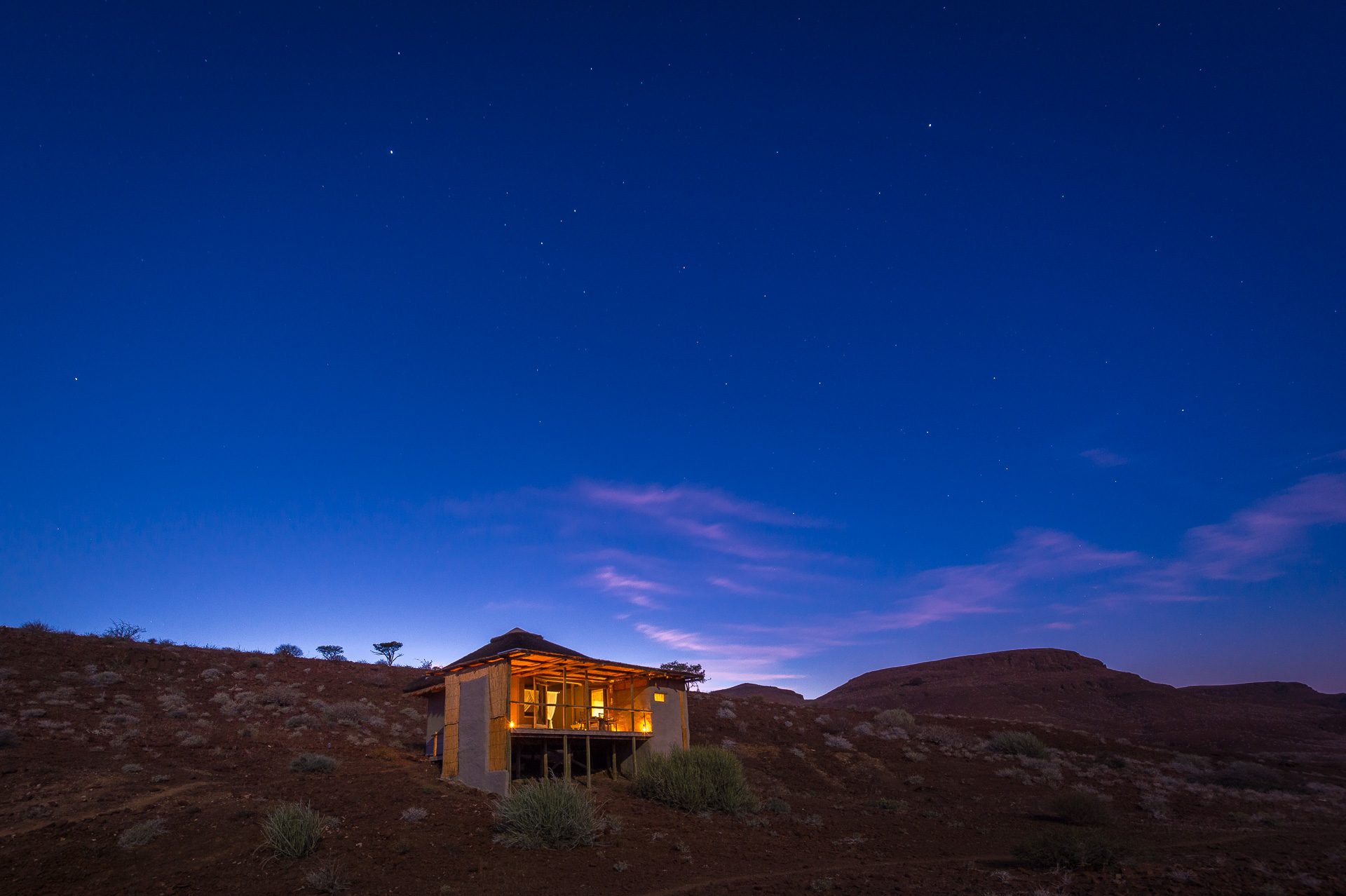
Doro Nawas camp on its ridge in DamaralandDamaraland · fly-in hub

Doro Nawas

On a ridge near the Twyfelfontein rock engravings, with rooftop star beds. Most flights in the north-west connect here.

Sunset over Damaraland CampHuab valley · drive or fly

Damaraland Camp

A community-run camp with sweeping views and a good chance of desert elephants. Reachable by road, so it suits self-drivers too.

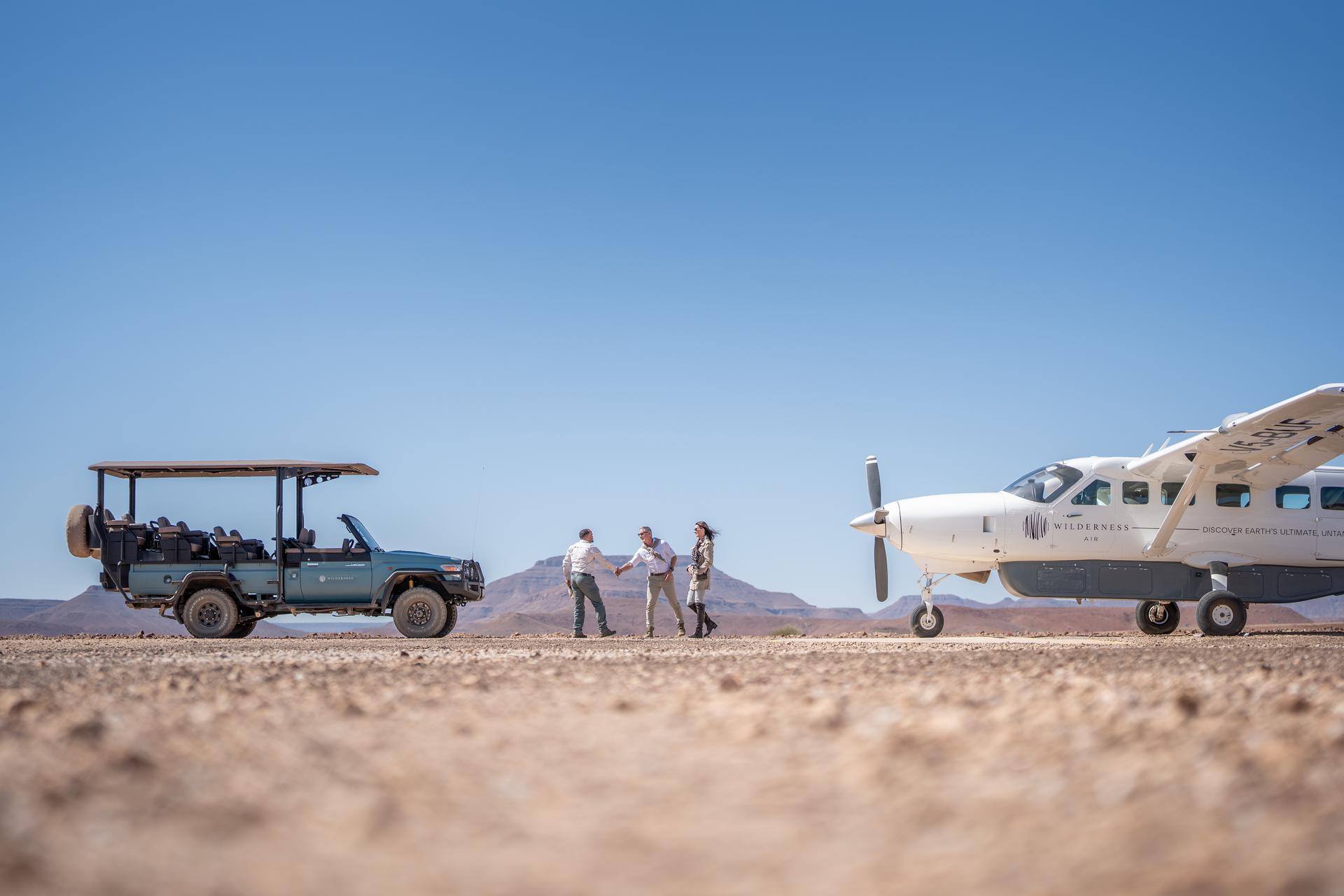
Light aircraft landing at a Wilderness airstripGetting around

Fly between camps

Scheduled light aircraft fly the circuit daily. From Windhoek to Doro Nawas costs about N$10,542 per person, and short hops between camps far less.

Camp rates

Wilderness camp rates

Per person per night sharing, fully inclusive: meals, local drinks and guided activities. Flights between camps are added separately.

Get a quote for your dates →
CampAreaShoulder seasonHigh season
Hoanib Skeleton CoastSkeleton CoastN$20,659N$31,881
Serra CafemaKunene RiverN$17,150N$28,372
Desert Rhino CampDamaralandN$11,486N$18,235
Damaraland CampDamaralandN$11,283N$16,019
Doro NawasDamaralandN$9,429N$11,351

Damaraland Camp and Doro Nawas can also be booked with dinner, bed and breakfast only (Damaraland Camp from N$7,315, Doro Nawas from N$5,755). Honeymooners: one of you pays half within 12 months of your wedding. Six nights or more across the camps earns 5% to 15% off. Children under 6 stay free and those aged 6 to 18 pay half. See our terms & conditions.

Skeleton Coast fly-in routes

Ready-made routes with the Skeleton Coast

Both routes are quoted for your dates and season, using the camp rates above plus your flights.

All fly-in safaris →
Tent at Hoanib Skeleton Coast Camp7 nights
Fly-in · dunes to the Skeleton Coast

7-Night Dunes & Desert Elephants

Luna, NamibRand · Hoanib Skeleton Coast · Desert Rhino Camp

StayFromBasis
3 nights LunaN$50,000per villa per night
2 nights Hoanib Skeleton CoastN$20,659pp per night sharing
2 nights Desert Rhino CampN$11,486pp per night sharing
Total for your datesOn requestincl. flights

Where you stay

  • 3 nights Luna · NamibRand, private villa
  • 2 nights Hoanib Skeleton Coast Camp · fully inclusive
  • 2 nights Desert Rhino Camp · fully inclusive

Included

  • Light aircraft flights between the camps
  • All meals, local drinks and guided activities at the camps
  • Sossusvlei, desert elephants and rhino tracking in one week

Not included: international flights, premium drinks, tips and wellness treatments.

The plains around Desert Rhino Camp10 nights
Fly-in · the full north-west

10-Night Ultimate Namibia

Sossusvlei · Skeleton Coast · Kunene River · Etosha

StayFromBasis
3 nights SossusvleiOn requestLuna, Little Kulala or Desert Whisper
3 nights Hoanib Skeleton CoastN$20,659pp per night sharing
2 nights Serra CafemaN$17,150pp per night sharing
2 nights Etosha King NehaleOn requestprivate transfer or flight

Where you stay

  • 3 nights Luna, Little Kulala or Desert Whisper · Sossusvlei
  • 3 nights Hoanib Skeleton Coast Camp · fully inclusive
  • 2 nights Serra Cafema · fully inclusive
  • 2 nights Etosha King Nehale · Etosha

Included

  • Light aircraft flights between the desert camps
  • Fully inclusive stays at the Wilderness camps
  • Private transfer or flight to Etosha King Nehale

Not included: international flights, premium drinks, tips and Etosha activities unless quoted.

An example north-west safari

Nine nights: rock art, rhino, the coast and the Kunene

All four regions of the north-west, flying between Wilderness camps. Start in Windhoek or add Sossusvlei first.

Plan my Skeleton Coast safari
  1. Nights 1–2

    Doro Nawas, Damaraland

    Fly from Windhoek to the hub of the circuit. Visit the Twyfelfontein engravings and sleep out on the roof.

  2. Nights 3–4

    Desert Rhino Camp

    A short hop to the private concession, for a morning tracking black rhino on foot.

  3. Nights 5–7

    Hoanib Skeleton Coast

    Three nights for the Hoanib valley's elephants and lions, and a full day out to the fog-bound coast.

  4. Nights 8–9

    Serra Cafema

    Fly north to the Kunene River for boat trips, the dunes and a visit to a Himba community.

  5. Day 10

    Fly back to Windhoek

    Connect to your international flight, or continue to Etosha or Victoria Falls.

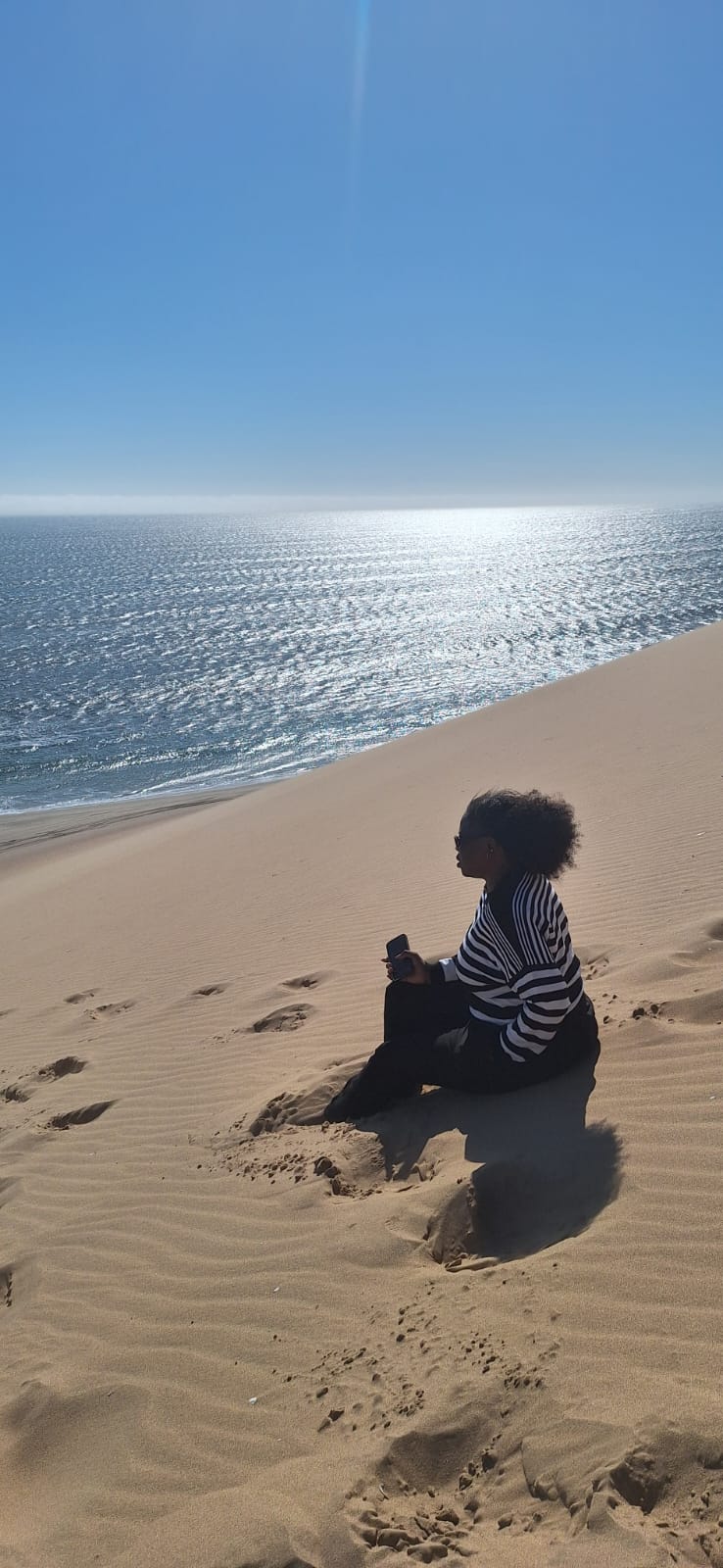
Dunes meeting the Atlantic Ocean on Namibia's coast
On a smaller budget?

Drive the southern Skeleton Coast

You don't need to fly to get a taste of the coast. From Swakopmund, the coastal road north passes the wreck of the Zeila and the huge seal colony at Cape Cross, then turns inland into Damaraland.

  • Ideal on a self-drive or with a private guide.
  • Stay at Damaraland Camp or Doro Nawas, both reachable by road.
  • Add one short flight to Hoanib Skeleton Coast for the wild north.
Ask us to compare options
Before you fly

Good to know

Soft bags, 20 kg

Light aircraft allow 20 kg per person in soft bags (no wheels or frames), about 30 × 35 × 70 cm. Extra weight costs N$2,800 per 20 kg per flight.

Fog is normal

Morning fog on the coast can delay flights. Your camp and pilots plan around it, so build in a relaxed connection home.

Stay long enough

Allow at least two nights per camp, and three at Hoanib Skeleton Coast, so the flights don't take over your trip.

Skeleton Coast travel guide

The Skeleton Coast: the complete travel guide

Everything to know about Namibia's Skeleton Coast: where it is and why it is called the Skeleton Coast, the shipwrecks, desert lions and other wildlife, how to visit by road or by air, permits and gates, and when to go.

At a glance

WhereNorth-west Namibian coast, Ugab River to the Kunene River
LengthAbout 500 km of coastline
National parkSkeleton Coast National Park
Southern accessUgab and Springbokwasser gates (self-drive, permit)
Northern accessFly-in camps only
Park fee (international adult)N$280 per day
WildlifeDesert lions, elephants, brown hyena, seals
WeatherCool, foggy coast; hot inland
MalariaNone on the coast
Best timeAll year; May–October for inland game
Getting thereLight aircraft from Windhoek or Swakopmund
Nights to stay3+ nights

Why is it called the Skeleton Coast?

The name comes from the whale and seal bones that once lay along the beaches from the whaling days, and from the shipwrecks scattered along the shore. Thick fog, strong currents and shifting sandbanks have caught many ships here, and for sailors who reached land there was nothing but desert. The San people are said to have called it "the land God made in anger", and Portuguese sailors "the sands of hell".

Today it is one of the most remote and beautiful wilderness areas in Africa: endless dunes, wide gravel plains, canyons and dry riverbeds running down to a wild, foggy Atlantic shore.

Wildlife on the Skeleton Coast

It seems impossible that anything could live here, but the riverbeds of the Hoanib and Hoarusib are green corridors through the desert. They support desert-adapted lions, some of which have learned to hunt on the beach, as well as desert elephants, giraffe, oryx, springbok, brown hyena and black-backed jackal. Along the shore there are large Cape fur seal colonies. The fog that rolls in from the sea gives life to lichens, beetles and other small creatures that drink the droplets.

How to visit: by road or by air

The southern section of the Skeleton Coast National Park can be visited by car. You enter at the Ugab Gate (from Henties Bay) or the Springbokwasser Gate (from Damaraland) and need a park permit. Day visitors must pass through within gate hours, and the gates close in the afternoon, so check times before you go. The coastal road to Terrace Bay passes wrecks, seal colonies and fishing spots. A sturdy vehicle is needed and there is very little fuel or help along the way.

The northern section, from the Hoanib River to the Kunene, is a protected wilderness concession that can only be reached on a fly-in safari. Light aircraft take you to camps such as Hoanib Skeleton Coast Camp, where guides drive you along the riverbeds and down to the coast. This is the only way to see the most remote parts and the Clay Castles of the Hoarusib. Flying in also gives you spectacular views of the dunes and coastline.

Park fees for international visitors are N$280 per adult per day at Etosha, the Namib-Naukluft (Sossusvlei), the Skeleton Coast and Cape Cross since 1 April 2026. Children aged 8 to 15 pay less and under-8s enter free. Our quotes always say whether park fees are included.

Shipwrecks you can see

The coast is lined with wrecks in different states of decay. The Zeila, a fishing trawler that ran aground near Henties Bay in 2008, sits close to the beach and is the easiest to see. Within the park, the remains of older vessels and the rusting relics of old diamond workings near Toscanini tell the stories of people who tried to make a living on this coast. Many wrecks have disappeared under the sand, and new ones appear as the dunes move. Read more in our guide to Skeleton Coast shipwrecks.

The Kunene River and the Himba

In the far north, the Skeleton Coast meets the Kunene River, Namibia's border with Angola, a ribbon of green palms in the desert. Here, camps such as Serra Cafema offer boating, quad biking on the dunes and respectful visits to the semi-nomadic Himba people of the Kaokoveld.

Weather and when to go

The coast is cool and often foggy all year, usually 15–20°C, while the inland valleys can be very hot in summer. The Skeleton Coast can be visited year-round. May to October gives the clearest inland days and the best game viewing as animals stay near the riverbeds, while summer brings occasional floods that make the rivers flow. Bring warm layers whatever the season.

Questions

Skeleton Coast questions

Something else? Ask us on WhatsApp.

How do you get to the Skeleton Coast?

The southern Skeleton Coast can be driven from Swakopmund. The remote north, where Hoanib Skeleton Coast and Serra Cafema are, is reached by light aircraft from Windhoek or the Doro Nawas hub.

How much does a Skeleton Coast safari cost?

Wilderness camps in the north-west start from about N$9,429 per person per night sharing, fully inclusive, rising to N$31,881 at Hoanib Skeleton Coast in high season. Flights are added separately, for example about N$10,542 per person from Windhoek to Doro Nawas.

What wildlife will I see on the Skeleton Coast?

Desert-adapted elephants, giraffe, lions, oryx and springbok in the river valleys, Cape fur seals on the coast, and black rhino in Damaraland.

When is the best time to visit the Skeleton Coast?

The camps are open all year. May to October has the clearest skies inland and good wildlife viewing. Coastal fog is common in the mornings at any time of year.

How many nights do I need?

Seven to ten nights lets you combine Damaraland, the Skeleton Coast and the Kunene. Even three nights at Hoanib Skeleton Coast is worth the flight.

Is the Skeleton Coast suitable for a honeymoon?

Very. It's remote, private and dramatic, and one partner pays half at the Wilderness camps within 12 months of the wedding. See our Namibia honeymoon safaris.

Can you drive the Skeleton Coast?

You can drive the southern part of the Skeleton Coast National Park, from the Ugab Gate to Terrace Bay and the Springbokwasser Gate, with a park permit. The northern part is a wilderness area reached only by fly-in safari.

Why is the Skeleton Coast called the Skeleton Coast?

Because of the whale and seal bones that once covered the beaches and the many shipwrecks along the shore, caused by thick fog, strong currents and shifting sands.

Are there lions on the Skeleton Coast?

Yes. Desert-adapted lions live in the Hoanib and Hoarusib riverbeds, and some have been seen hunting seals and birds on the beach. Guided drives from Hoanib Skeleton Coast Camp give the best chance of seeing them.

What is the most famous shipwreck on the Skeleton Coast?

The Dunedin Star, wrecked in 1942, is the most famous story, while the Zeila near Henties Bay is the wreck most visitors see today.

Start planning

Tell us about your Namibia trip

Send us a few details and a Namibia specialist will reply with ideas and a personal quote. Planning is free, and you only pay a deposit once you're ready to book.

Quick enquiry

· Full trip form