 Guided tour10 days
10-Day Namibian Highlights Tour
Kalahari · Sossusvlei · Swakopmund · Damaraland · Etosha
FromN$72,950per person sharing
View tour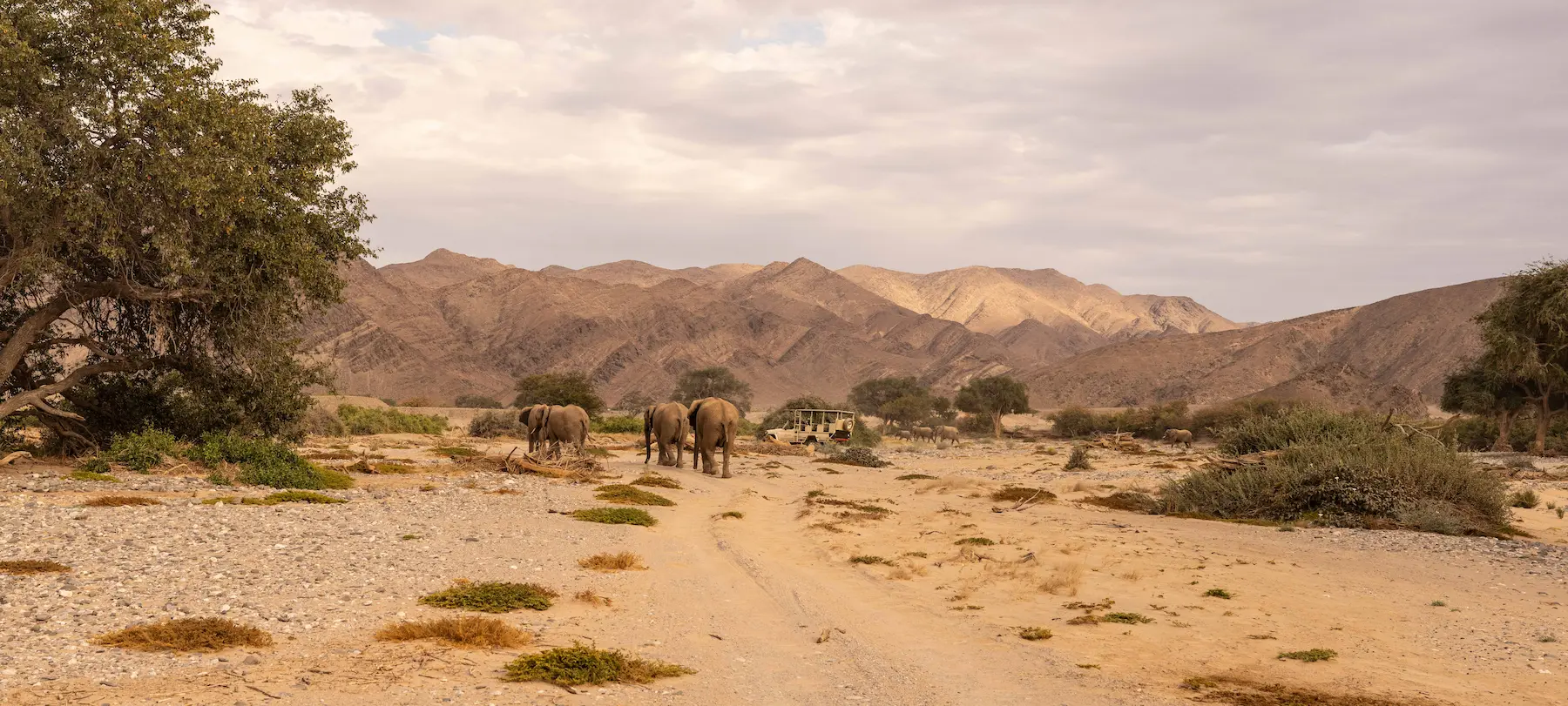
Red mountains, ancient rock engravings and elephants that have learned to live in the desert. Damaraland is Namibia at its wildest, and the perfect stop between the coast and Etosha.
Damaraland is a huge, sparsely populated region of flat-topped mountains, boulder-strewn valleys and dry riverbeds, stretching from the Skeleton Coast inland towards Etosha.
Its most famous residents are the desert-adapted elephants that wander the Huab and Ugab riverbeds, walking long distances between waterholes. The region is also home to desert black rhino, giraffe, oryx and springbok, living in community conservancies where local people share in the benefits of tourism.
People have lived here for thousands of years. At Twyfelfontein, a UNESCO World Heritage Site, more than two thousand engravings of animals and footprints are cut into the sandstone.
Read our Damaraland travel guide →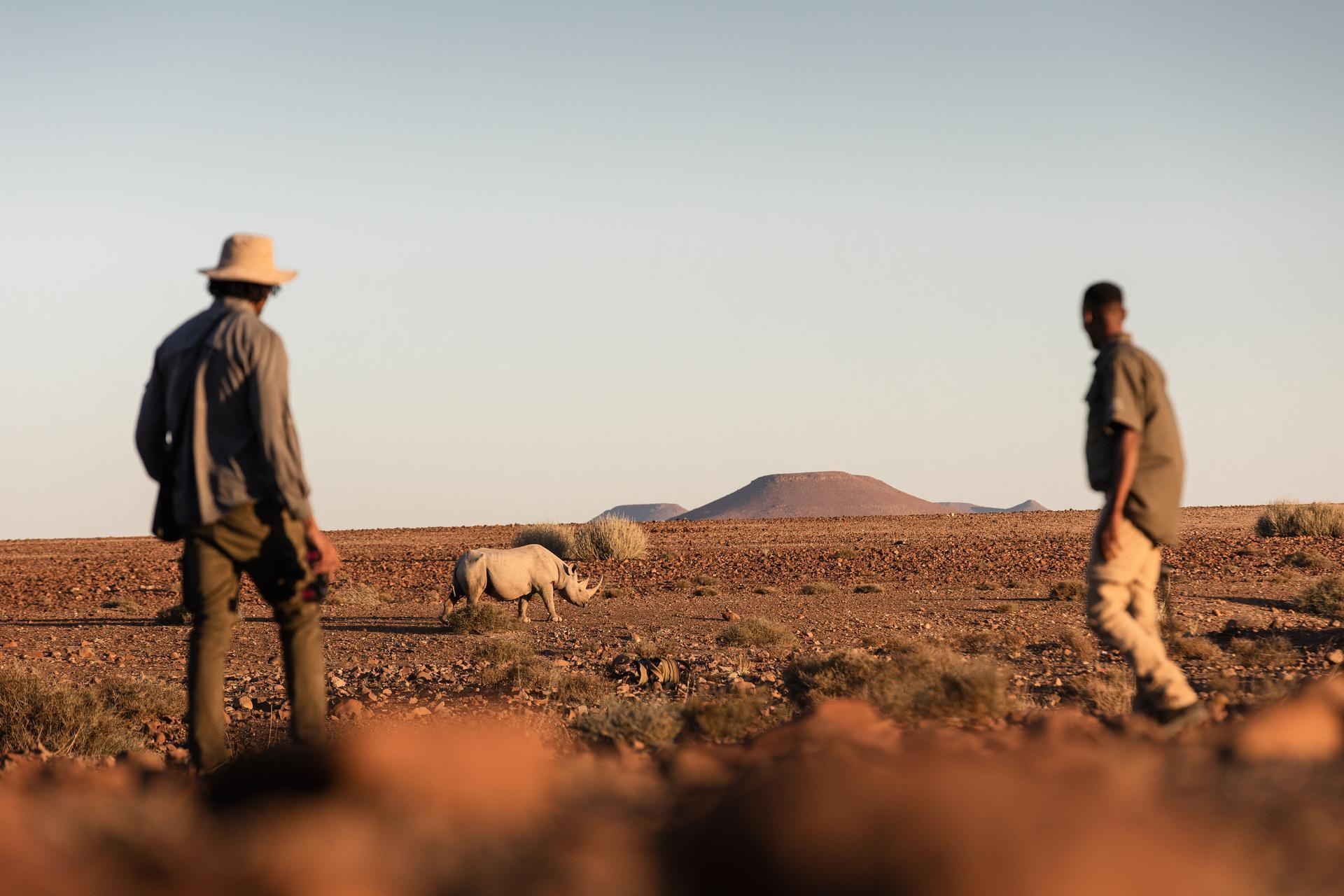
Damaraland is part of our guided highlights tour and the Wilderness fly-in safaris. On a self-drive or shuttle trip, we add two nights here on the way to Etosha.
Guided tour10 days
Kalahari · Sossusvlei · Swakopmund · Damaraland · Etosha
 Fly-in7 nights
Luna · Hoanib Skeleton Coast · Desert Rhino Camp
 Fly-in10 nights
Sossusvlei · Skeleton Coast · Kunene River · Etosha
Prices are per person sharing and depend on availability and season. Your final price is confirmed when you book. See our terms & conditions.
Go out with a guide who knows the riverbeds to find the elephants that survive in this dry country. Sightings are never guaranteed, which makes them all the more special.
In the private concession around Desert Rhino Camp, trackers lead you on foot to desert black rhino.
Namibia's UNESCO World Heritage Site, with thousands of ancient engravings of animals, footprints and symbols.
Columns of dark dolerite rock and a hillside that seems to glow red and black in the late afternoon.
Fossilised tree trunks millions of years old, lying in the open, with welwitschia plants growing nearby.
Learn how the Damara people traditionally lived, from making fire to finding food and medicine in the bush.
From a comfortable lodge on our touring routes to Wilderness camps deep in private concessions.
| Lodge | What it's like | From |
|---|---|---|
| Damara Mopane Lodge Near Khorixas | Chalets with their own gardens, on our guided tour and shuttle routes | Included in our tours |
| Palmwag Lodge Palmwag | On the edge of a huge concession, popular with self-drivers | On request |
| Doro Nawas Near Twyfelfontein | On a ridge above the valley, with rooftop star beds | N$9,429 fully inclusive · N$5,755 dinner, bed & breakfast |
| Damaraland Camp Huab valley | Community-run, with a good chance of desert elephants | N$11,283 fully inclusive · N$7,315 dinner, bed & breakfast |
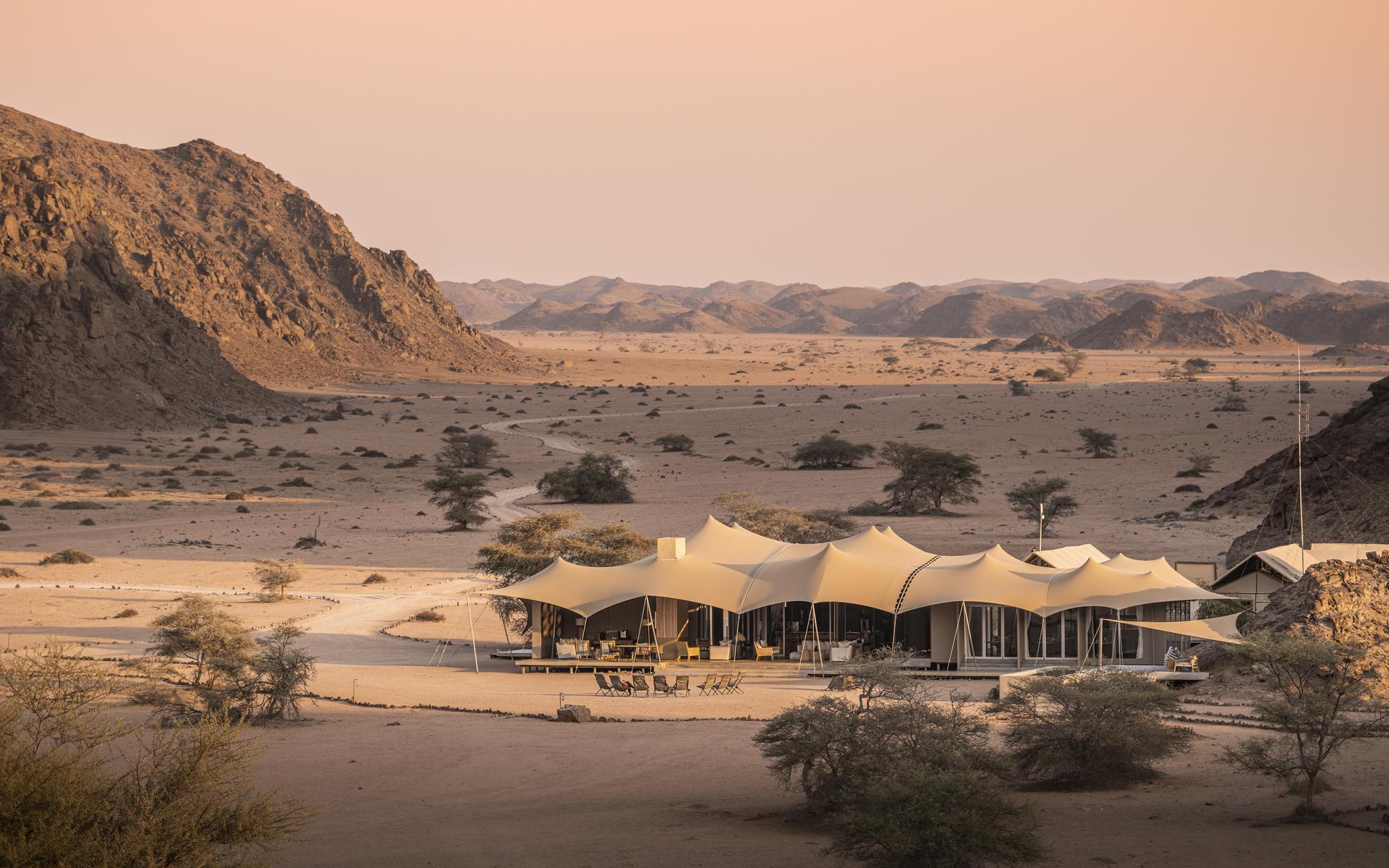
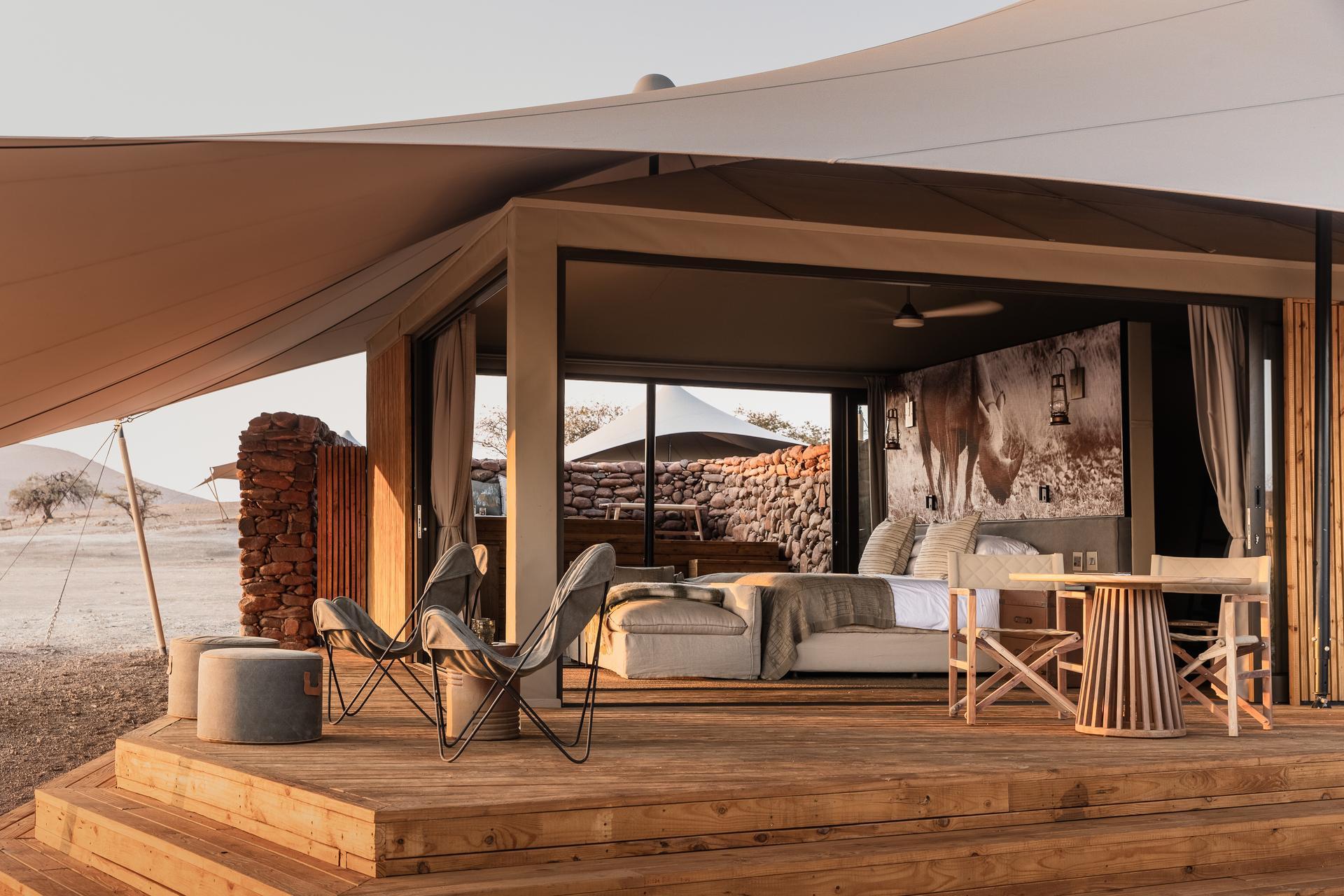
| Desert Rhino Camp Private concession | Remote tented camp for rhino tracking on foot | N$11,486 fully inclusive |
Per person per night sharing, shoulder season. Fully inclusive means meals, local drinks and guided activities. See our terms & conditions.
How a Damaraland stop fits between Swakopmund and Etosha on a self-drive or guided trip. We adjust it to your route.
Plan my Damaraland stayLeave Swakopmund and head inland past the Brandberg, Namibia's highest mountain, arriving in time for a sundowner.
Stay at, for example, Damara Mopane Lodge or Doro Nawas
Morning at Twyfelfontein, the Organ Pipes and Burnt Mountain. In the afternoon, a guided drive along the riverbeds to look for desert elephants.
Stop at the Petrified Forest or the Damara Living Museum, then continue east towards Etosha.
A practical guide to Damaraland in north-west Namibia: where it is, how to find the desert-adapted elephants and rhino, Twyfelfontein rock art, the Petrified Forest, Brandberg and Spitzkoppe, driving tips and when to go.
Damaraland is the name still used for the wild, rugged region of north-west Namibia between the Skeleton Coast and Etosha, roughly from the Ugab River north to the Hoanib River. It takes its name from the Damara people who live here. It is a land of flat-topped mountains, red rock, dry riverbeds and huge open plains, with very few people.
There are no fences and no national park. Instead, much of the land is managed by communal conservancies, where local communities share in the income from tourism and protect the wildlife. It is one of Africa's great conservation success stories.
Damaraland is famous for its desert-adapted elephants. These elephants roam the dry riverbeds of the Huab, Aba-Huab, Ugab and Hoanib, travelling long distances between water sources and eating plants that other elephants ignore. They live in small family groups and can go several days without drinking. The best way to find them is on a guided drive with lodge guides who track them daily.
The region is also home to the largest free-roaming population of black rhino in the world. Rhino tracking on foot, with expert trackers from Save the Rhino Trust and the local conservancies, is one of Namibia's most memorable experiences. You may also see giraffe, Hartmann's mountain zebra, oryx, springbok, kudu, and, rarely, desert lions.
Roads in Damaraland are almost all gravel and some cross sandy riverbeds, so a 4x4 or high-clearance vehicle is strongly recommended. Distances are long, fuel stations are few (fill up in Uis, Khorixas, Kamanjab or Palmwag), and there is little mobile signal. Never drive into elephant herds or riverbeds without a guide, and give elephants plenty of space. Prefer not to drive? We can include a private guide or fly you in to camps such as Desert Rhino Camp and Doro Nawas.
The Damara are one of Namibia's oldest peoples and speak Khoekhoegowab, a language with click sounds. Further north, in the Kaokoveld, live the semi-nomadic Himba, known for their red ochre body paint. If you visit a community, go with a guide on a respectful, community-run visit, ask before taking photos, and buy crafts directly from the makers.
Damaraland is dry and sunny most of the year. May to October is cooler and the best time to find elephants and rhino, as they stay close to the few water sources. Days are warm and nights can be cold. November to April is hot (often above 35°C), with occasional afternoon thunderstorms that can briefly flood riverbeds. The landscape turns green after rain and visitor numbers are low.
In north-west Namibia, between the Skeleton Coast and Etosha National Park. It's the natural stop between Swakopmund and Etosha.
There's a good chance on a guided drive with someone who knows where the herds have been moving, but they roam over huge distances, so sightings are never guaranteed.
Two nights lets you see Twyfelfontein and go out looking for elephants. Three nights is ideal if you'd like to track rhino on foot or stay at a remote camp.
Yes. The main roads are gravel and a 4x4 or sturdy SUV is recommended. Distances are long, so plan to arrive before dark. Guided activities for elephants and rhino are worth booking even on a self-drive.
You can visit all year. May to October is cooler and dry. The summer rains, mostly from January to March, turn the valleys green but can make some riverbeds harder to cross.
A UNESCO World Heritage Site with more than two thousand ancient rock engravings, including animals, footprints and the famous Lion Plate. Local guides take you along the trails.
Namibia's desert-adapted elephants live mainly in the dry riverbeds of Damaraland and the Kunene Region, especially the Huab, Aba-Huab, Ugab and Hoanib rivers. Guided drives from lodges such as Damaraland Camp give the best chance of finding them.
Most of the engravings at Twyfelfontein are thought to be between about 2,000 and 6,000 years old, carved by San hunter-gatherers. The site has been a UNESCO World Heritage Site since 2007.
Yes. Lodges such as Desert Rhino Camp offer rhino tracking on foot with expert trackers, following the world's largest free-roaming population of black rhino.
Yes, it is an easy stop between Khorixas and Twyfelfontein. A local guide shows you fossilised trees around 280 million years old and some huge welwitschia plants in about an hour.
Spitzkoppe lies just south of Damaraland in the Erongo Region, but it is usually visited on the same route, between Swakopmund and Twyfelfontein.
Rock art, mountains, desert elephants and a 3-day route.
Read the guide Travel guideThe Lion Plate, guided tours and what to see nearby.
Read the guide Travel guideThe Rock Arch and Bushman's Paradise near the coast.
Read the guide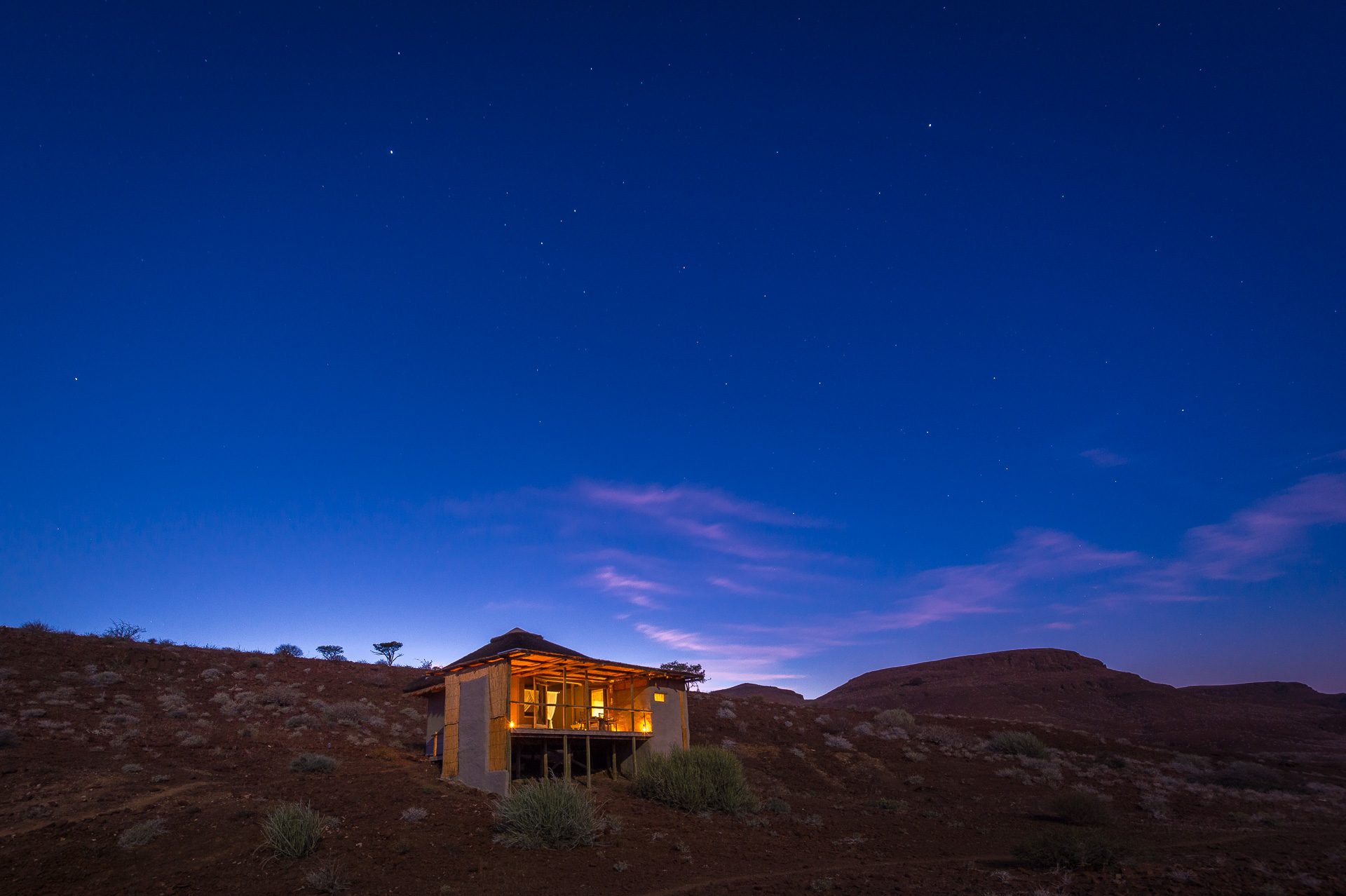
Send us a few details and a Namibia specialist will reply with ideas and a personal quote. Planning is free, and you only pay a deposit once you're ready to book.