Namibia is one of the sunniest countries in Africa, but its weather changes a lot from month to month and from place to place. The coast can be cool and foggy while the desert is baking hot only a few hours' drive inland, and the north gets summer thunderstorms while the Namib stays almost completely dry. This guide explains the Namibia weather by month, region by region, so you know what to expect, what to pack and which months suit your trip best.
Namibia weather at a glance
- Dry season: May to October: sunny days, almost no rain, cold nights in June and July
- Rainy season: about November to April, with most rain from January to March, mainly in the north and centre
- Hottest months: October to January inland, often 30°C and above
- Coldest months: June and July, when nights can drop close to freezing in the interior
- The coast: cool all year, usually around 16 to 21°C, with morning fog
Namibia's seasons in brief
Namibia sits in the southern hemisphere, so its seasons are the opposite of Europe's and North America's. Winter runs from about June to August and summer from about December to February. Most of the country is high, dry plateau, which gives it warm, sunny days and cool nights for much of the year.
It helps to think of the year in three parts:
- The cool dry season (May to August): clear blue skies, comfortable daytime temperatures and cold nights. The most popular time to travel.
- The hot dry season (September to November): the heat builds, the bush is at its driest and animals gather at the waterholes, especially in Etosha.
- The green season (about December to April): hot days and afternoon thunderstorms, mostly in the north and centre. The landscape turns green, birdlife is at its best and many animals give birth.
Average temperatures and rainfall
These are long-term averages for three places that show how different Namibia's regions are: Windhoek in the centre, Swakopmund on the coast and Tsumeb near Etosha in the north. Real weather changes from year to year, so treat them as a guide.
| Month | Windhoek (centre) | Swakopmund (coast) | Tsumeb, near Etosha (north) |
|---|---|---|---|
| January | 17–32°C, about 80 mm rain | 15–20°C, dry | 18–31°C, about 120 mm |
| February | 17–31°C, about 80 mm | 16–21°C, dry | 18–30°C, about 140 mm |
| March | 16–30°C, about 80 mm | 15–20°C, dry | 17–29°C, about 80 mm |
| April | 13–28°C, about 40 mm | 13–18°C, dry | 15–28°C, about 40 mm |
| May | 11–26°C, very little rain | 11–18°C, dry | 11–26°C, very little rain |
| June | 8–23°C, dry | 11–20°C, dry | 8–24°C, dry |
| July | 7–23°C, dry | 9–18°C, dry | 8–24°C, dry |
| August | 10–26°C, dry | 9–16°C, dry | 10–27°C, dry |
| September | 14–30°C, dry | 10–16°C, dry | 15–31°C, dry |
| October | 16–32°C, about 12 mm | 11–16°C, dry | 18–33°C, about 20 mm |
| November | 16–32°C, about 25 mm | 13–18°C, dry | 18–32°C, about 55 mm |
| December | 17–33°C, about 40 mm | 14–19°C, dry | 18–31°C, about 95 mm |
Temperatures are average daily lows and highs. Source: long-term climate averages compiled by Climates to Travel.
Namibia weather month by month
January
Hot inland, with afternoon thunderstorms in the centre and north. Etosha turns green and the birdlife is excellent. The coast is pleasant and busy with local holidaymakers. The south and the Fish River Canyon area are extremely hot.
February
Often the wettest month in the north, where storms can make some gravel roads muddy. The landscapes are lush and dramatic, and you'll share the parks with far fewer visitors.
March
Still warm and green, with rain becoming less frequent towards the end of the month. A good month for photographers who love big skies and green plains.
April
The rains fade and temperatures ease. The country is still green, the air is clear and the dust hasn't returned yet. A lovely shoulder month for a self-drive.
May
Namibia weather in May is close to perfect for many travellers: dry, sunny days of around 25°C inland, cooler nights and very little rain anywhere. The landscape is still golden after the rains, and the busy season hasn't fully started. Pack a warm layer for early game drives and evenings.
June
Winter begins. Days are sunny and mild, but nights in the desert and the interior can drop close to freezing. Game viewing in Etosha keeps improving as water dries up.
July
The coldest month inland, with crisp, clear days and very cold nights. This is peak season, especially around European summer holidays, so book lodges early. Etosha's waterholes get busier with wildlife.
August
Warmer days, still dry, and excellent wildlife viewing. Strong winds can blow in some areas, and the coast is at its coolest and foggiest.
September
Warm to hot inland, very dry, with superb game viewing as animals depend on the waterholes. One of the best months for an Etosha safari.
October
Namibia weather in October is hot and dry, with daytime highs often above 30°C inland and above 35°C in the north-east. It's one of the best months for wildlife at the waterholes, but plan dune walks and hikes for early morning. The first scattered showers can arrive late in the month.
November
Hot, with the first summer storms building in the north and centre. Wildlife is still concentrated around water early in the month, and the first newborn antelope begin to appear.
December
Hot and humid inland, with afternoon storms. The coast is busy as Namibians escape the heat, so book Swakopmund and Walvis Bay early for the festive season.
The rainy season in Namibia
The rainy season in Namibia runs from about November to April, but even then rain usually comes as short afternoon thunderstorms rather than days of grey drizzle. Mornings are often clear and bright. Most rain falls from January to March, and the amount drops sharply from north-east to south-west: the Zambezi Region and the north get the most, Windhoek gets moderate summer rain, while the Namib Desert and the coast receive almost none.
The green season has real advantages: fewer visitors, lower rates at many lodges, dramatic skies, newborn animals and spectacular birdlife. The trade-offs are high temperatures, some muddy or flooded gravel roads after heavy storms, and wildlife that spreads out because there is water everywhere. Our Namibia green season guide explains how to make the most of it.

Weather by region
The coast
Swakopmund, Walvis Bay and the Skeleton Coast
Cool all year, with daytime highs of about 16 to 21°C, morning fog and almost no rain. The cold Benguela Current keeps the sea chilly, around 14 to 17°C. On some days, mostly between about April and June, a hot east wind blows from the desert and briefly raises the temperature. See our guide to things to do in Walvis Bay.
The desert
Sossusvlei and the Namib
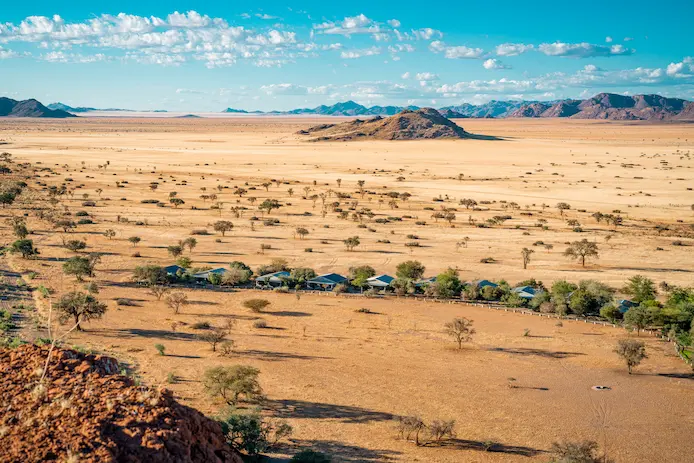
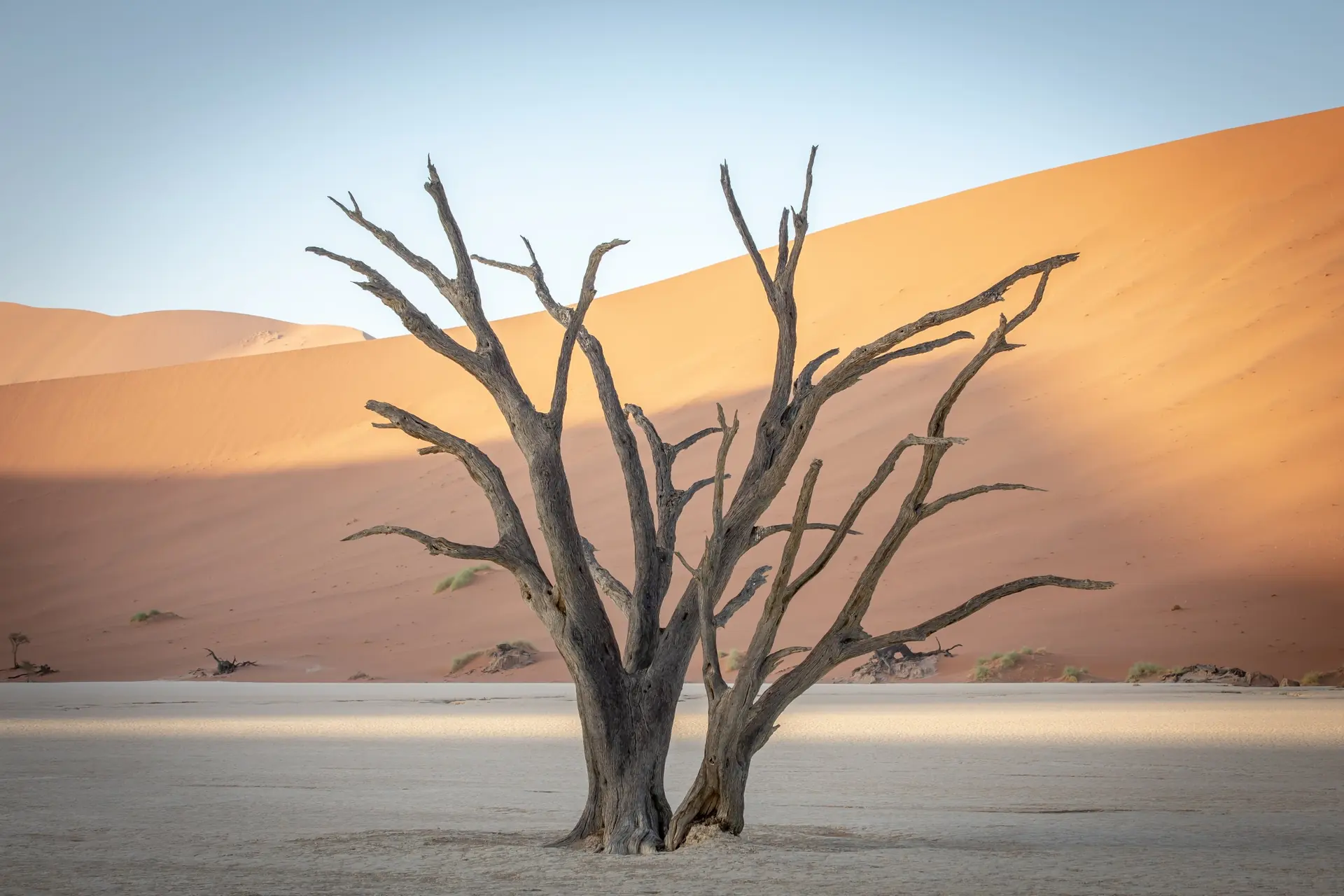
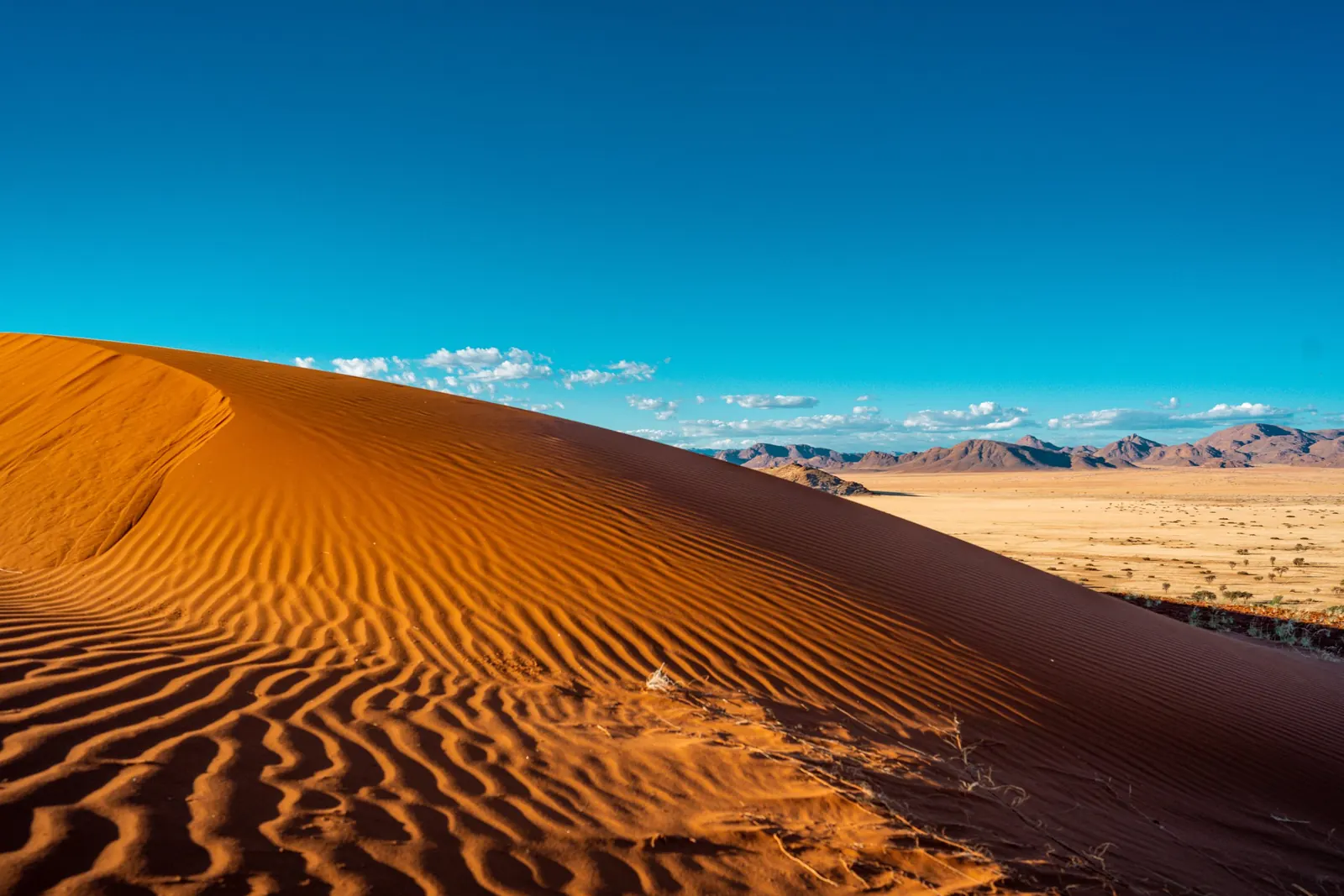
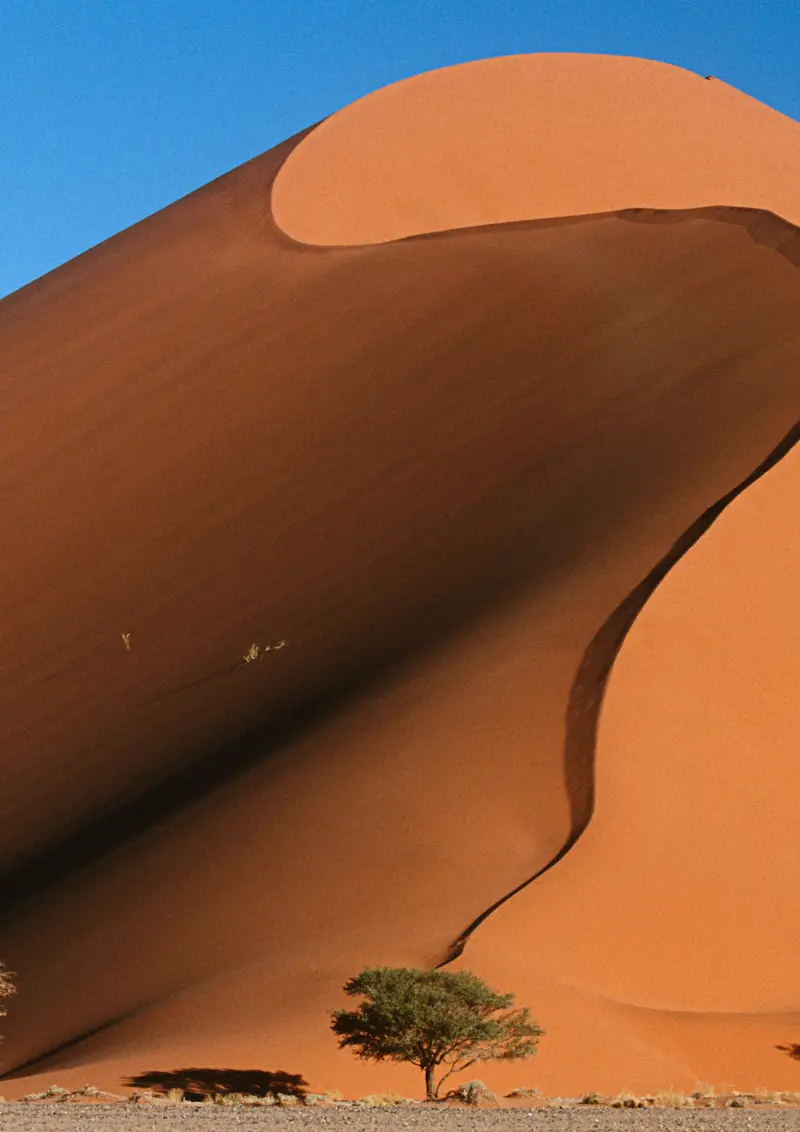
Very dry all year. Summer days are extremely hot, so dune walks are best at sunrise. Winter days are warm and pleasant, but nights can be close to freezing. Our Sossusvlei and Deadvlei guide has the details.
The north
Etosha and the north
Summer rain from about November to April, peaking from January to March. October is usually the hottest month. Dry-season game viewing is excellent. Read our guide to the best Etosha waterholes.
The south
Fish River Canyon and the Kalahari
Very dry, with fierce summer heat: the canyon floor can reach well over 40°C. Winters are cooler, which is why the multi-day canyon hike is only open in the cooler months.
What to pack for Namibia's weather
- Layers: a fleece and a warm jacket for early mornings, evenings and the coast, even in summer.
- Sun protection: a wide-brimmed hat, sunglasses and high-factor sunscreen in every season.
- Light, breathable clothing in neutral colours for hot days and game drives.
- A light rain jacket from November to April.
- A beanie and gloves for open-vehicle game drives in June and July.
Our full Namibia packing list covers everything else.
So when should you go?
For most first-time visitors, May to October is the easiest time: dry, sunny and excellent for wildlife. If you prefer fewer crowds, green landscapes and lower rates, consider April, May or November, which can also help your budget (see how much a Namibia safari costs). For the full picture, including the best months for each region and activity, read our guide to the best time to visit Namibia.
Our tours for every season
- 7-Day Namibia Highlights Safari (Windhoek, Etosha, Swakopmund and Sossusvlei): A guided week, ideal in the dry season from May to October. See our guided tours.
- Ten days by shuttle (Sossusvlei, Swakopmund, Damaraland and Etosha): A relaxed way to travel in any season, with someone else driving. See our shuttle tours.
- Twelve-day self-drive (Windhoek to Etosha via Sossusvlei, Swakopmund and Damaraland): Perfect for the cool, dry months, when gravel roads are at their best. See our self-drive tours.
A storm builds over the plains in the afternoon, the first drops darken the red sand, and by evening the sky is clear and full of stars again. In Namibia, even the weather tells a story.
Frequently asked questions
What is the weather like in Namibia in May?
May is dry and sunny, with daytime highs of around 25°C inland and cool to cold nights. There is very little rain anywhere, which makes it one of the best months to visit.
What is the weather like in Namibia in October?
October is hot and dry, with highs often above 30°C inland and higher in the north-east. It is excellent for wildlife at Etosha's waterholes, but plan dune walks for early morning.
When is the rainy season in Namibia?
The rainy season runs from about November to April, with most rain from January to March. Rain usually falls as short afternoon thunderstorms, mainly in the north and centre. The coast and the Namib Desert get almost no rain.
What is the hottest month in Namibia?
Inland, October to January are the hottest months, with highs often above 30°C. The south, including the Fish River Canyon, can be extremely hot in December and January.
What is the coldest month in Namibia?
June and July are the coldest months. Days are sunny and mild, but nights in the desert and interior can drop close to freezing, so pack warm layers.
Is Namibia hot all year?
No. Inland days are warm to hot for most of the year, but winter nights are cold, and the coast stays cool all year, with daytime highs of about 16 to 21°C.
Plan your trip around the weather
Tell us when you'd like to travel, and we'll suggest the best route and activities for that month.
WhatsApp Us Explore Namibia Tours