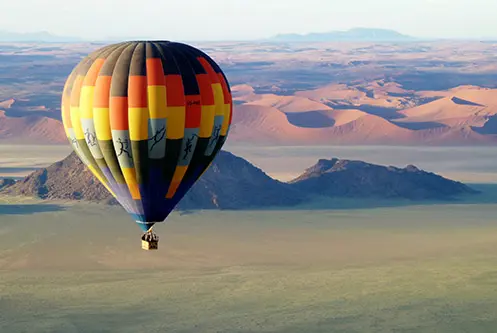
Planning your first trip to Namibia is exciting, but the distances, different safari options and sheer number of places to visit can make it difficult to know where to begin. Should you start with Etosha or Sossusvlei? Is seven days enough? Do you need a 4x4? This guide takes you through the decisions that matter, so you can plan a Namibia holiday that suits your time, interests and budget.
At a glance
- Best time: May to October is popular for dry-season wildlife viewing; other months can offer greener scenery and quieter travel.
- Ideal duration: 10 to 14 days for a first visit; seven days for a faster highlights trip.
- Classic destinations: Etosha, Swakopmund, Sossusvlei and Damaraland.
- Getting around: Self-drive, guided safari, shared shuttle or fly-in.
- Accommodation: Book early for popular dates, particularly near Sossusvlei and Etosha.
- Budget: Compare complete tour inclusions, not just the advertised starting price.
Start with the kind of Namibia holiday you want
The first thing to know about Namibia is that it isn't a destination you should try to squeeze into a few days. Its landscapes are enormous, and the journey between destinations is often part of the experience.
Before choosing lodges or flights, think about what you most want to see.
If wildlife is your priority, Etosha National Park deserves several days. If you've dreamed of climbing red dunes and photographing Deadvlei, make Sossusvlei a highlight. If you enjoy coastal adventures, Swakopmund and Walvis Bay offer a completely different side of the country.
For travellers who love remote landscapes, Damaraland is a wonderful addition.
You don't need to see everything on your first trip. A well-planned itinerary with time to enjoy each destination is usually far more rewarding than a rushed journey.
Step 1: Decide when to visit Namibia
Namibia is a year-round destination, but the experience changes with the seasons.
May to October: dry-season travel
The dry season is popular for wildlife safaris, particularly in Etosha. As water becomes scarce, animals often gather around permanent waterholes, making them easier to observe.
Days are generally sunny and dry, while early mornings and evenings can be surprisingly cold, especially in the desert during winter.
July to October is a popular travel period, so accommodation in sought-after locations can fill up well in advance.
November to April: green-season travel
Summer brings warmer temperatures and the possibility of rain, although conditions vary considerably between regions.
The landscape can become greener, especially in northern Namibia. This is also a rewarding period for birdwatching.
Some lodges may offer more attractive rates outside holiday periods, but rain can affect certain gravel roads and remote routes.
Which month should you choose?
For wildlife viewing, consider the drier months. For dramatic skies, greener landscapes and potentially quieter travel, explore the shoulder and green seasons.
The best month depends on your priorities, so choose the experiences you want before deciding on dates.
Step 2: Decide how many days you need
One of the biggest mistakes first-time visitors make is underestimating travel distances.
Namibia may look manageable on a map, but journeys between destinations can involve several hours on gravel roads.
Three to four days
Choose one main destination.
A short trip could focus on Sossusvlei and the Namib Desert, or Etosha National Park. Trying to combine both in just a few days usually creates an exhausting itinerary.
Seven days
A week can cover the classic highlights of Etosha, Swakopmund and Sossusvlei, but expect some long travel days.
This works best when your transport and accommodation are carefully coordinated.
Ten days
Ten days is a comfortable starting point for many first-time visitors.
You can combine the dunes, the coast and Etosha, with the possibility of adding Damaraland depending on your preferred pace.
Fourteen days or longer
Two weeks gives you more freedom to explore remote areas, spend additional nights at your favourite destinations or include the Kalahari and southern Namibia.
Our advice is to spend at least two nights at most major stops rather than changing accommodation every day.
Step 3: Choose your must-see destinations
Etosha National Park: wildlife and waterholes
Etosha is one of Namibia's most famous safari destinations.
The park is known for its salt pan, open landscapes and wildlife, including elephants, lions, giraffes, zebras and several antelope species.
The waterholes are a major attraction, especially in the dry season.
Allow at least two nights, although three nights or more gives you a better opportunity to explore different areas of the park.
Sossusvlei and Deadvlei: the iconic red dunes
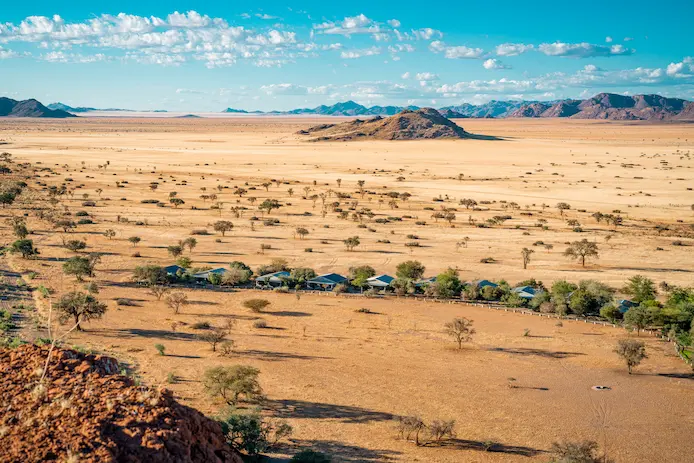
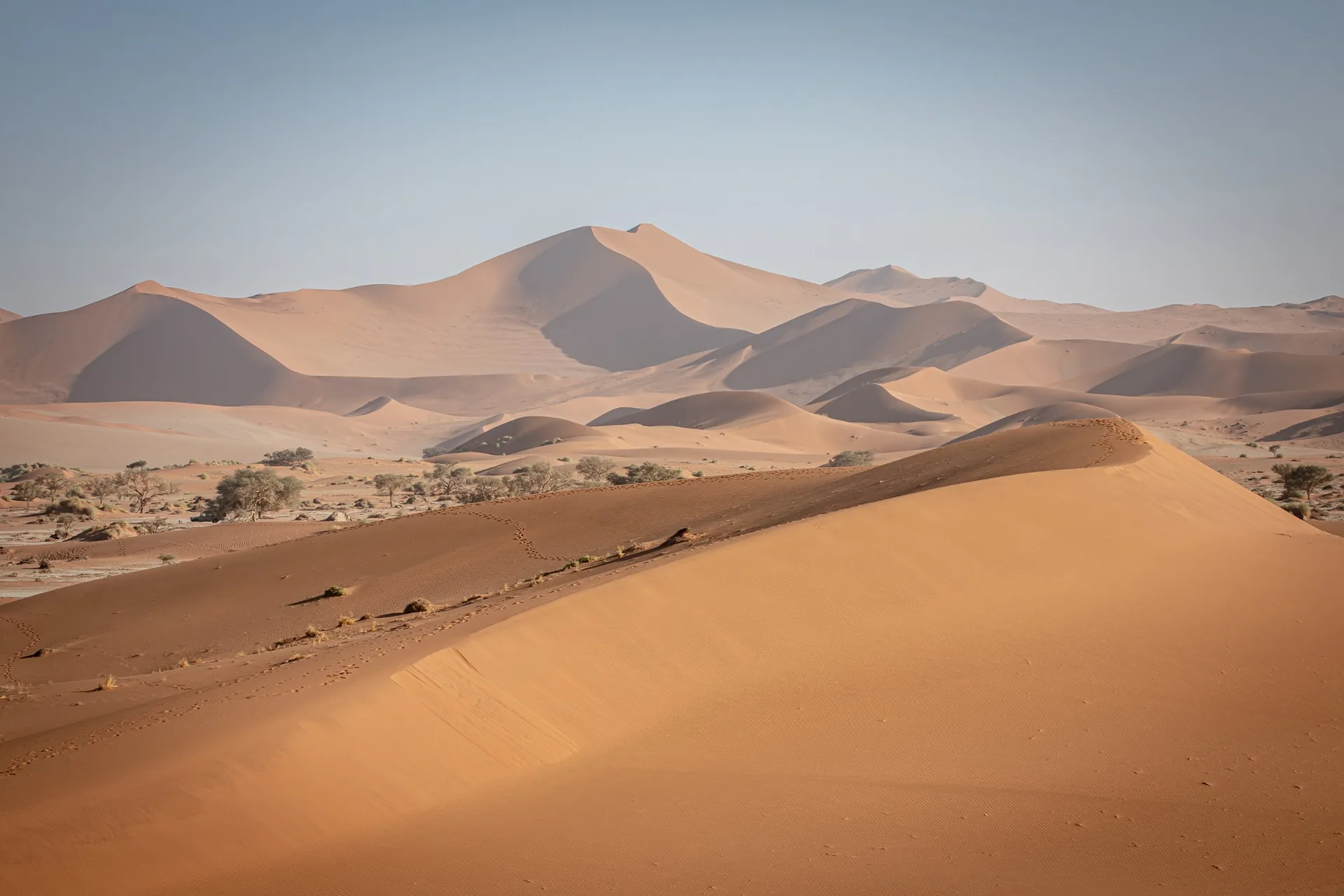
The towering dunes of the Namib Desert are among Namibia's most recognisable landscapes.
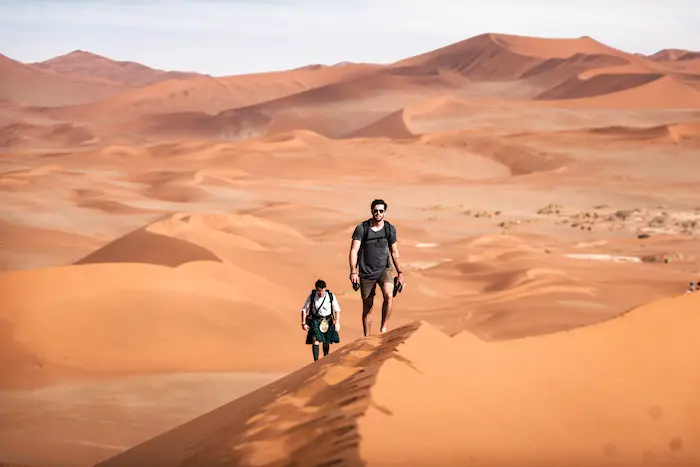
Visitors come to see Dune 45, the remarkable white clay pan of Deadvlei and the dramatic colours of the dunes at sunrise.
Two nights in the Sesriem area is a good starting point.
Your accommodation location matters because park gate access and excursion arrangements can affect how early you reach the dunes.
Swakopmund and Walvis Bay: coastal adventures
After the desert, the Atlantic coast feels like a different world.
Swakopmund offers cafés, coastal scenery and adventure activities, while nearby Walvis Bay is known for its lagoon, marine excursions and the extraordinary meeting of dunes and ocean around Sandwich Harbour.
Two nights gives you time for a selected excursion and some relaxation.
Damaraland: landscapes, culture and desert-adapted wildlife
Damaraland is an excellent addition if you have more time.
The region is known for rugged mountains, ancient rock engravings and opportunities to learn about desert-adapted wildlife.
Distances can be long, so allow enough time for the journey and activities rather than treating it as a quick stop.
Step 4: Choose how you want to travel
There are several ways to explore Namibia, and the right option depends on your comfort level.
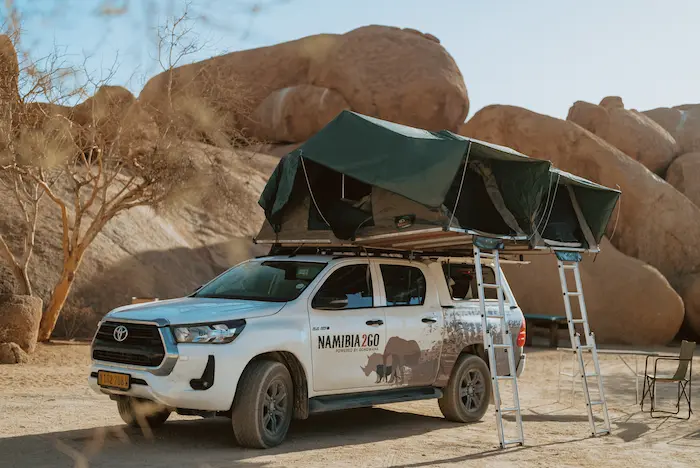
Self-drive safari
Self-drive is popular with independent travellers who enjoy road trips.
You collect a rental vehicle, follow your planned itinerary and travel between destinations yourself.
It offers flexibility, but you need to be comfortable with long distances and gravel roads.
Guided safari
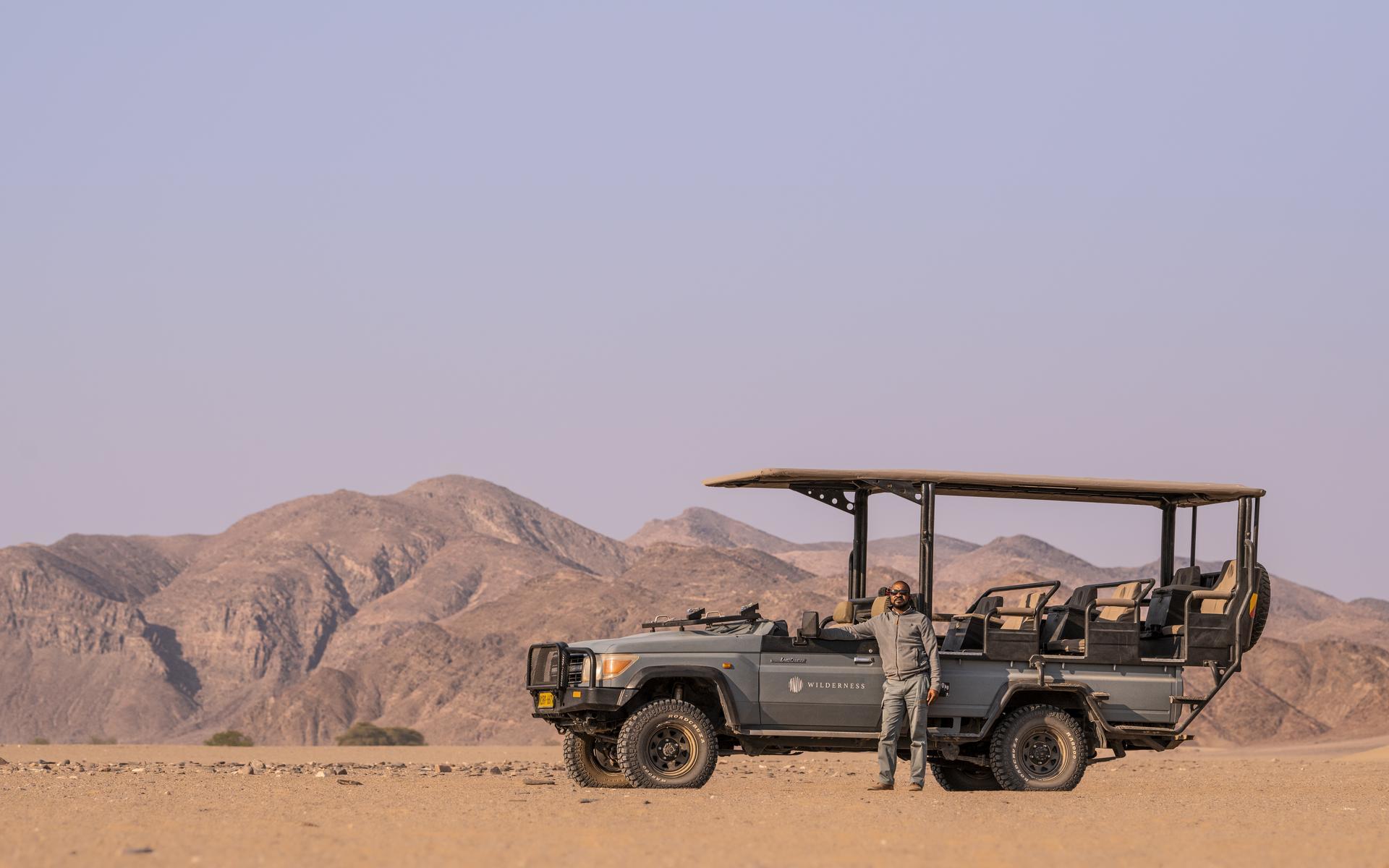
A guided safari is ideal if you prefer someone else to handle the driving and navigation.
An experienced guide can also share local knowledge about the wildlife, landscapes and communities you visit.
Private guided tours offer greater flexibility, while scheduled tours may follow fixed routes and dates.
Shared-shuttle tours
Shared shuttles provide an alternative for travellers who don't want to drive but don't necessarily need a private guide throughout their trip.
Transport between destinations can be combined with lodge stays and separately arranged excursions.
Check the inclusions carefully, as a transfer service is not the same as a fully guided safari.
Fly-in safari
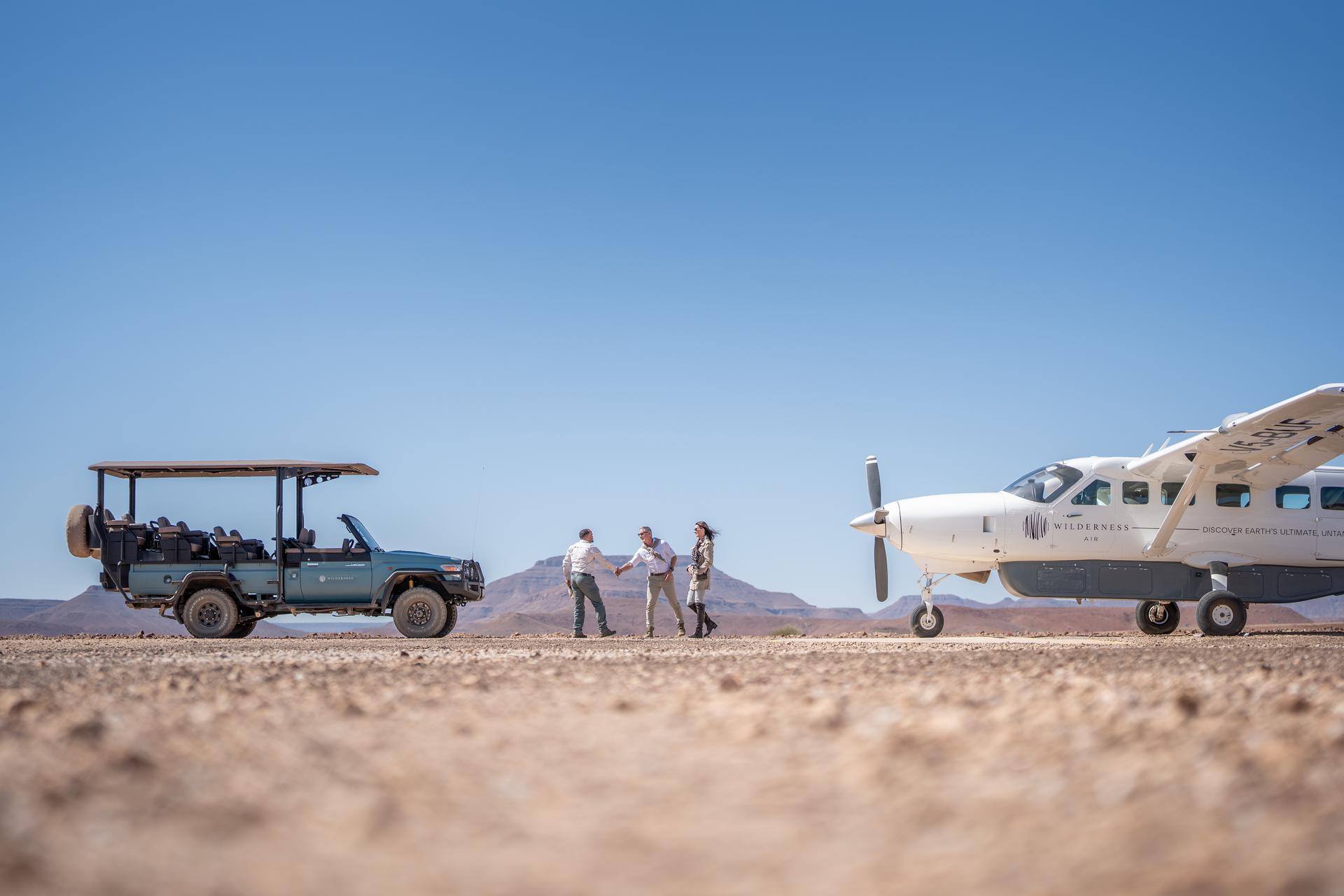
Light-aircraft travel can reduce long road journeys and provide access to remote lodges.
Fly-in safaris are especially appealing when time is limited or you want to visit more secluded parts of Namibia.
They generally involve a higher budget than road-based journeys.
Step 5: Plan a realistic first-time itinerary
For many travellers, a ten-day journey offers a good balance between sightseeing and relaxation.
Here is an example route:
Day 1: Arrive in Windhoek
Arrive, settle in and prepare for your journey. Depending on your flight time, an overnight stay in Windhoek may be the most comfortable option.
Days 2–3: Sossusvlei
Travel to the Namib Desert and spend two nights near Sesriem.
Enjoy a morning excursion to Sossusvlei and Deadvlei, with time for the dunes and Sesriem Canyon.
Days 4–5: Swakopmund
Continue to the coast and spend two nights exploring Swakopmund and Walvis Bay.
Choose an activity that interests you, such as a marine excursion or a guided desert experience.
Days 6–7: Damaraland
Travel north into Damaraland and enjoy its dramatic scenery.
Depending on your route and accommodation, you could visit cultural or geological attractions or join a guided nature excursion.
Days 8–9: Etosha
Spend two nights in or near Etosha National Park, with time for game drives and wildlife viewing.
Day 10: Return to Windhoek
Travel back towards Windhoek for your onward flight or overnight stay.
This is an illustrative route, not a guaranteed schedule. Driving times, lodge locations and flight departures need to be checked carefully. In particular, the return from Etosha can take several hours, so an additional overnight stay may be advisable.
Step 6: Understand what your Namibia holiday will cost
A Namibia holiday can range from a relatively simple self-drive trip to an exclusive fly-in safari.
The cost depends on several factors:
- Travel season and accommodation category
- Number of nights
- Number of travellers sharing
- Rental vehicle, guided transport or flights
- Meals and activities
- Park entry fees and transfers
When comparing tour prices, always check exactly what is included.
For example, a self-drive package might include accommodation and vehicle rental but exclude fuel and some activities. A guided tour may include more services, making its headline price higher but the comparison more balanced.
Ask for a clear, itemised quotation before committing to a package.
Step 7: Choose accommodation that suits your itinerary
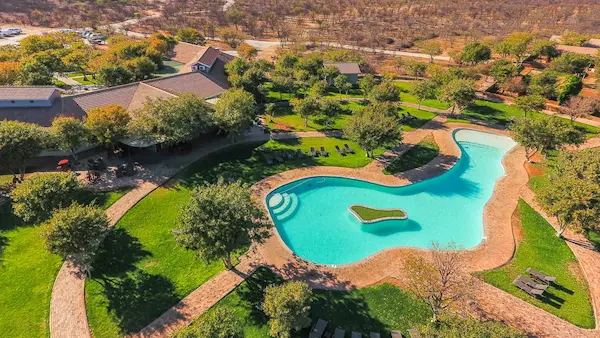
Namibia offers everything from campsites and comfortable lodges to private desert retreats.
The most expensive accommodation is not automatically the best choice for every traveller.
Consider the location first.
Near Sossusvlei, a lodge closer to the Sesriem gate may be more convenient for an early excursion, while a property farther into the desert might offer more seclusion and activities.
In Etosha, your choice between accommodation inside the park and lodges outside the gates affects your daily game-drive plans.
If you're travelling as a family, look for suitable room configurations, meal arrangements and facilities. If you're celebrating a special occasion, a quieter lodge with distinctive experiences may be worth considering.
Step 8: Prepare for Namibia's roads and distances
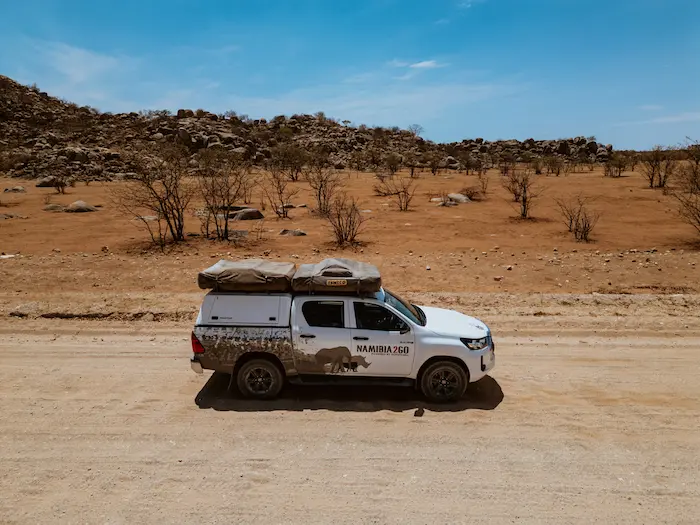
If you're self-driving, take the road conditions seriously.
Many routes include gravel roads, and travel times can be longer than expected.
Plan to arrive before dark. Carry drinking water, check your vehicle and spare tyre, and refuel whenever practical.
Do not assume that every route requires a 4x4, but don't assume that a standard car is suitable for every destination either.
Choose your vehicle according to the actual roads you'll travel, the season and your rental company's guidance.
For travellers who would rather not drive, guided and shared-transfer options remove much of this responsibility.
Step 9: Check entry requirements and practical details
Before travelling, confirm the entry requirements for your passport and travel dates.
Namibia's visa requirements vary by nationality and can change. Check the latest information with the relevant Namibian immigration authority or embassy.
Also consider:
- Passport validity and blank-page requirements
- Travel insurance
- Medical advice and malaria precautions for the regions and season you are visiting
- Payment methods and access to cash
- Mobile connectivity in remote areas
- Luggage restrictions for light-aircraft flights
- Appropriate clothing for both warm days and cool evenings
If you plan to cross borders or rent a vehicle, check the additional documentation required.
Step 10: Book your Namibia trip in the right order
Once you've chosen your dates and preferred travel style, confirm the most important arrangements first.
For peak-season travel, accommodation availability can shape the entire itinerary, particularly near Sossusvlei and Etosha.
A sensible booking order is:
- Confirm travel dates and arrival and departure points.
- Decide on your main destinations and number of nights.
- Check accommodation availability.
- Confirm transport, guides or rental vehicle arrangements.
- Add activities and excursions.
- Review the complete itinerary and inclusions.
- Finalise payments according to your booking terms.
Booking early is particularly helpful for travel during popular dry-season months.
Common mistakes first-time visitors should avoid
Trying to see too much
Namibia rewards slower travel. Allow enough time to enjoy the places you visit rather than spending every day moving between lodges.
Underestimating driving times
A few hundred kilometres can take much longer on gravel than on a highway. Build realistic travel times into your itinerary.
Booking accommodation without checking the location
Two lodges described as being near Sossusvlei may be very different distances from the park gate.
Forgetting about optional activity costs
Marine cruises, scenic flights, balloon rides and specialist excursions may not be included in your package.
Leaving peak-season bookings too late
Popular lodges and certain room categories can sell out well ahead of travel.
Ready to plan your first Namibia holiday?
Your first visit to Namibia should feel exciting, not overwhelming.
Start with the experiences that matter most to you, choose a realistic number of days and select a travel style that suits your comfort level.
Whether you want to drive yourself, travel with a guide or explore Namibia using shared transfers, Tourgy Tourz Namibia can help you put the journey together.
Tell us your travel dates, number of travellers, approximate budget and the places you'd most like to visit. We'll help you build an itinerary that makes sense for your first Namibia adventure.
Frequently asked questions
How many days should I spend in Namibia for my first trip?
Ten to fourteen days is ideal for many first-time visitors. Seven days can cover selected highlights, but travel days may be long.
What is the best month to visit Namibia?
May to October is popular for dry-season travel and wildlife viewing. The best month depends on whether you prioritise wildlife, landscapes, weather or quieter travel.
Do I need a 4x4 to travel around Namibia?
Not for every itinerary. Some popular routes are accessible with a suitable two-wheel-drive vehicle, while remote roads may require higher clearance or four-wheel drive.
Can I visit Namibia without renting a car?
Yes. Guided safaris, shared-shuttle tours, private transfers and fly-in safaris are alternatives to self-driving.
Is Namibia expensive for first-time visitors?
Costs vary significantly depending on accommodation, transport, season and activities. Compare complete package inclusions and request a quotation based on your dates.
Should I book my Namibia trip in advance?
Yes, particularly for popular travel periods from July to October. Booking early improves your chances of securing preferred accommodation and travel arrangements.
Plan your Namibia trip
Tell us your dates and wish list, and our Namibia team will plan the rest.
WhatsApp Us Send your trip details